Original IP · Comics · Animation · Sculpture
Ragnarock Tales
A fantasy storyworld developed across comics, animation, character design, and sculpture.
The Long Road
A role-playing game character became the seed from which grew a long-running fantasy storyworld expressed through animation, comics, character design, sculpture, and continuing visual development. Ragnarock Tales was co-created with Dan Sheehan, whose collaboration helped shape the project from an early passion into a larger world.
- Origin
- Circa 1994
- First Adaptation
- Adventure fantasy animation pitch, circa 2003
- Current Form
- Completed comic issue #1
- Primary Influences
- Dungeons & Dragons, Lord of The Rings, The Princess Bride, Lethal Weapon movie franchise
- Co-Creators
- Eric Serviss and Dan Sheehan
- Eric Serviss’s Role
- Story Developer / Sequential Artist / Character and World Designer
The Oldest Surviving Form
IN SEARCH OF FAME AND GLORY.
Stirculius began as an ugly, greedy, selfish elf named after the Roman god of feces. He was designed to betray people for money and make the table laugh. Over a dozen sessions, guilt began to appear beneath the joke, and I became attached to him.
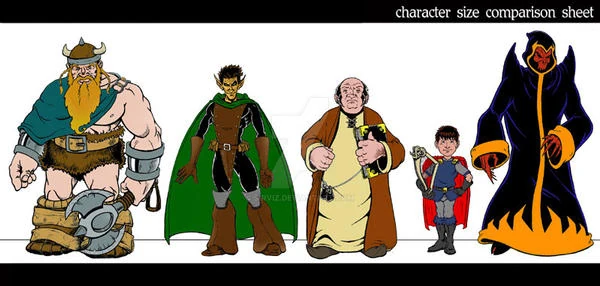
Years later, he entered a humorous fantasy animation pitch beside a seven-year-old bard, an overbuilt Viking, a self-absorbed cleric, and other broad archetypes. Most of that first ensemble eventually fell away. Stirculius remained.
Issue One
BRINGING RAGNAROCK TALES TO THE PAGE.
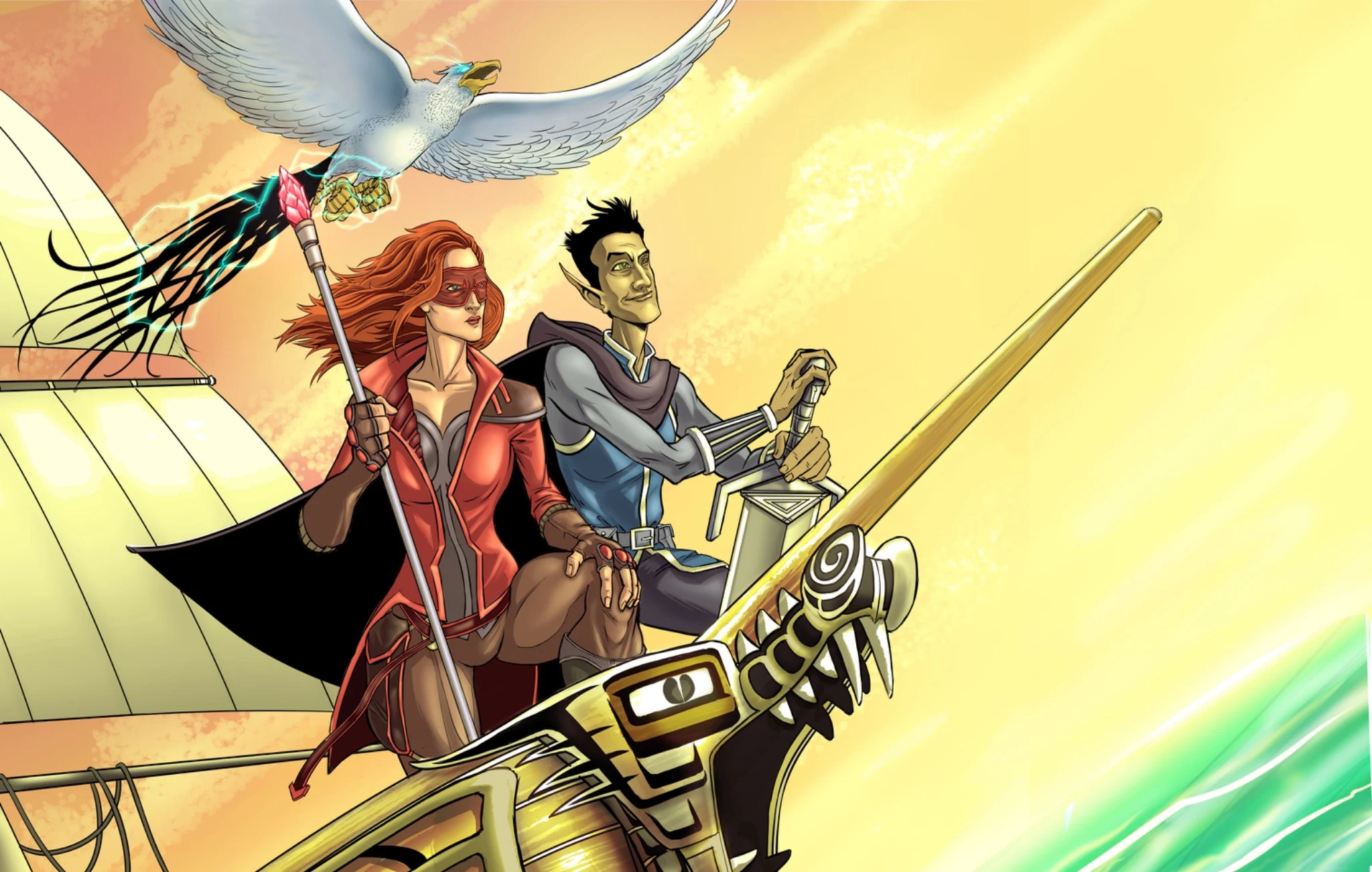
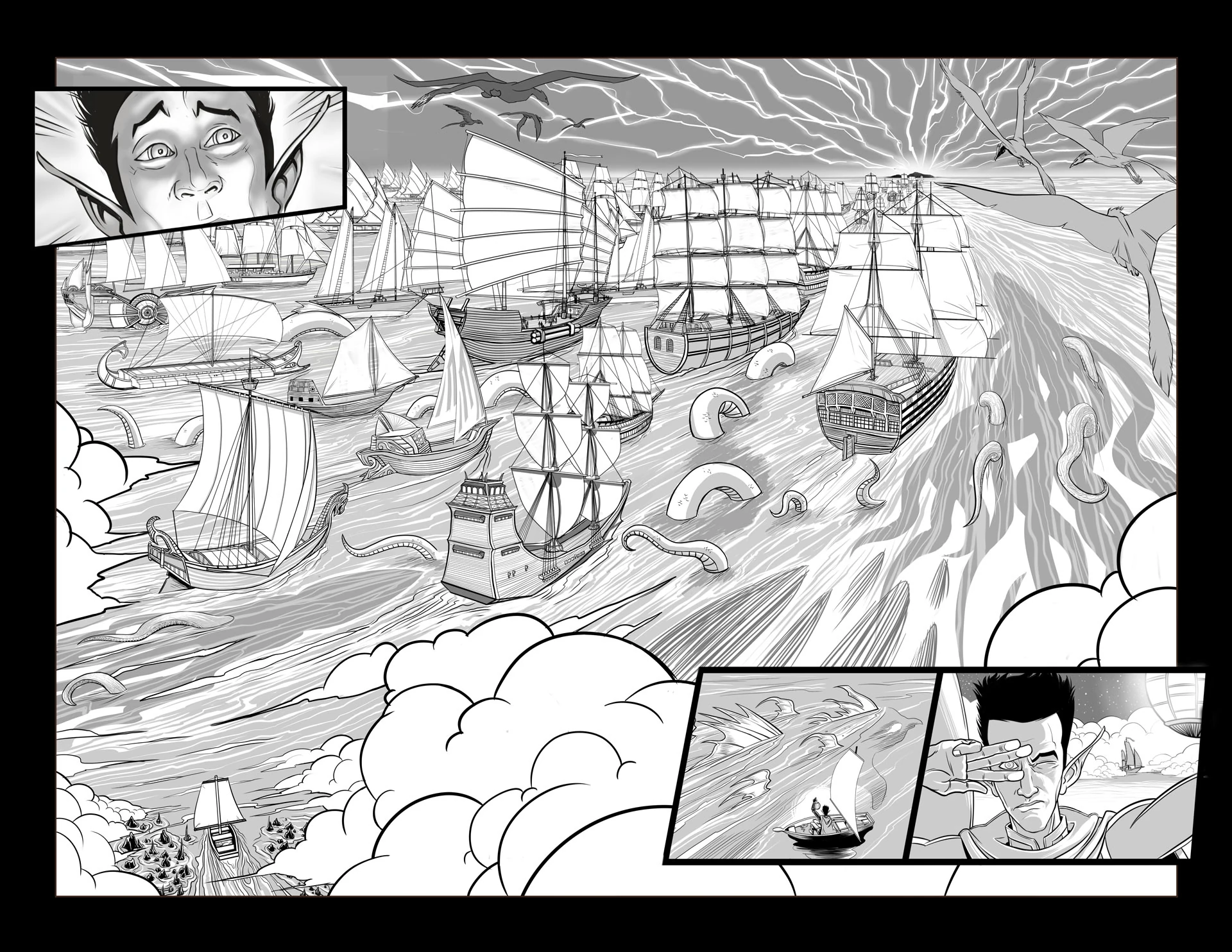
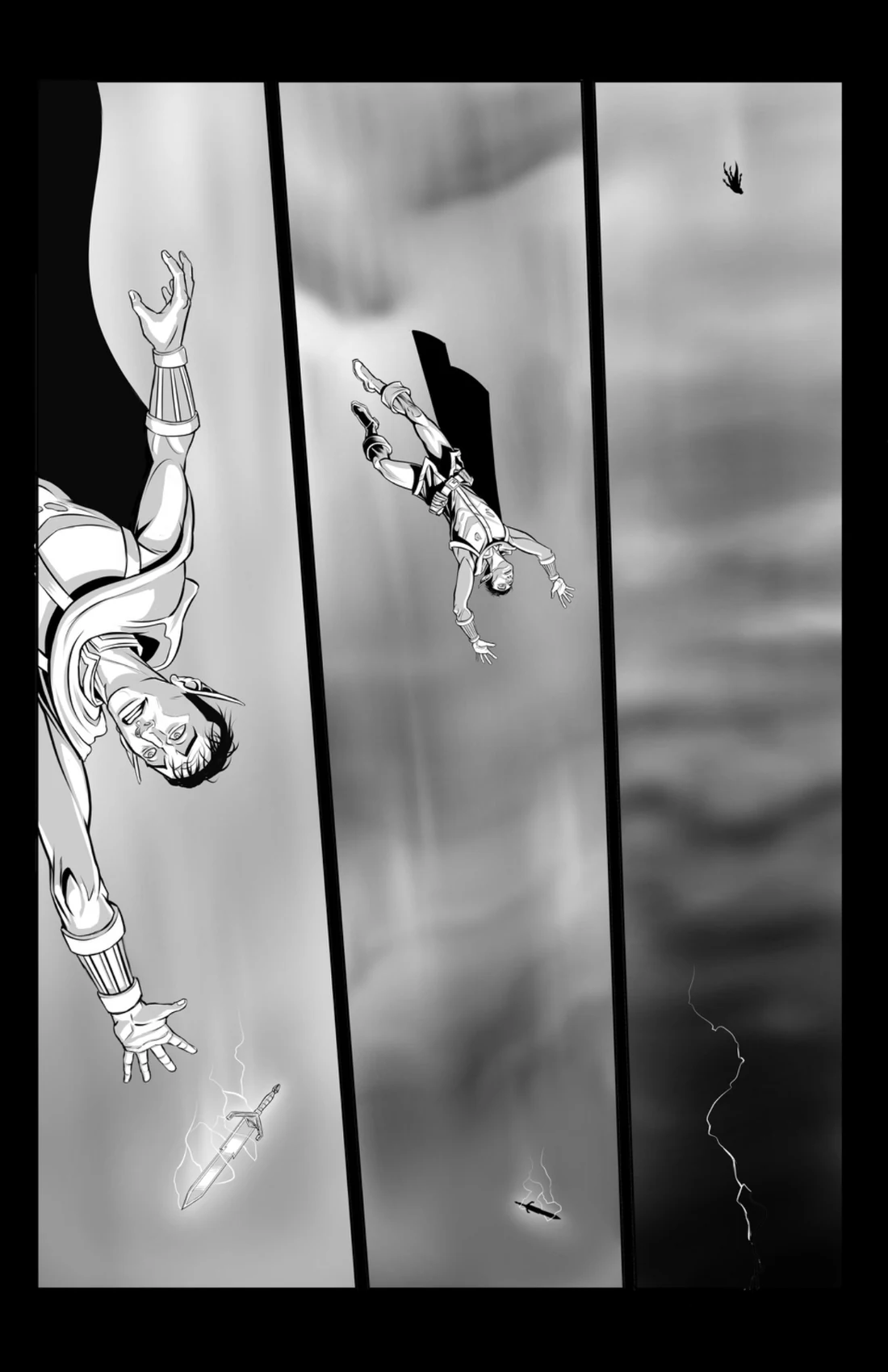
Stirculius follows what he believes is a treasure map to a distant island, passes through electrically charged thunderbirds, discovers an armada moving toward Ulf’s city, steals a magical storm sword, and is blasted into the heart of a storm.
The finished issue established the project as a fully realized comic world, combining detailed environments, expressive character acting, cinematic action, and broad fantasy scale.
It concluded on a dramatic cliffhanger, with the larger conflict still gathering beyond Stirculius’s immediate adventure.
Finding the Emotional Engine
TWO FRIENDS. TWO VERY DIFFERENT IDEAS OF HOME.
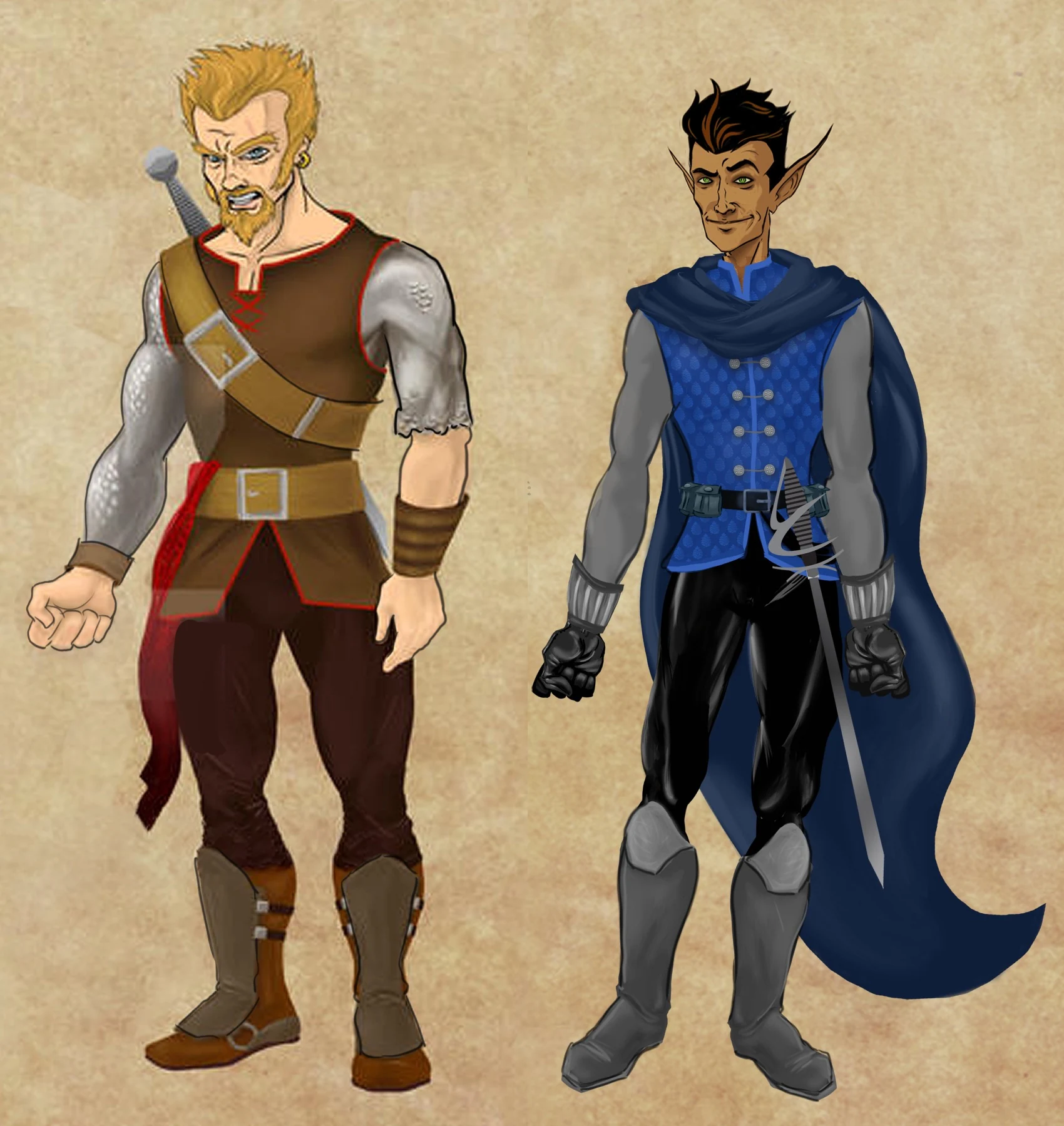
During the years when my nights were devoted to writing, drawing, and building worlds, Stirculius was paired with Ulf, a pure-hearted warrior from the hinterlands.
Stirculius was ashamed of his origins and dismissed the family he still had. Ulf had lost his family after they died defending their people. Their friendship created the emotional contradiction the larger story needed: one man desperate to escape where he came from, and another who would give anything to return.
The World Kept Expanding
A WIDER WORLD TAKES SHAPE.
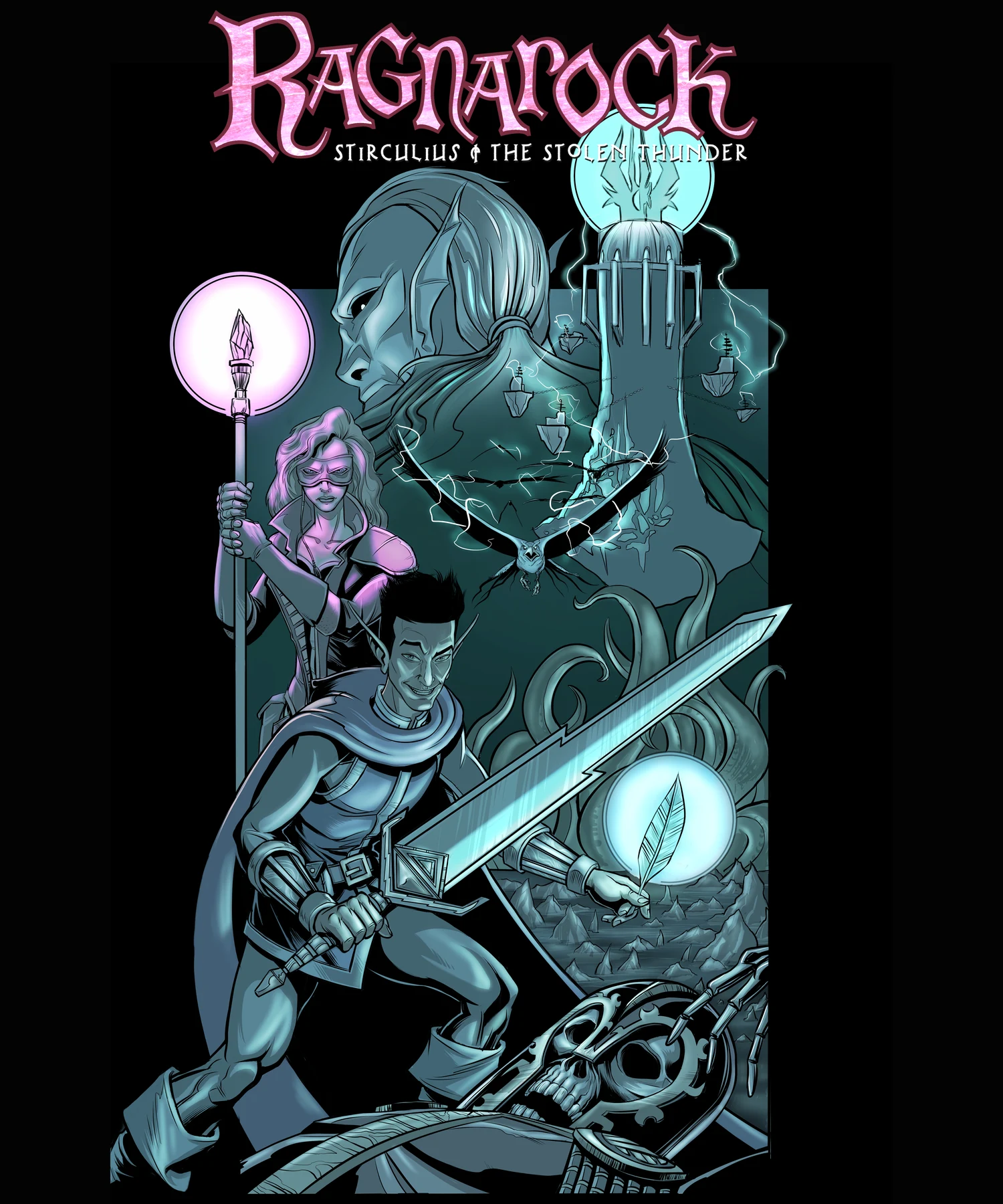
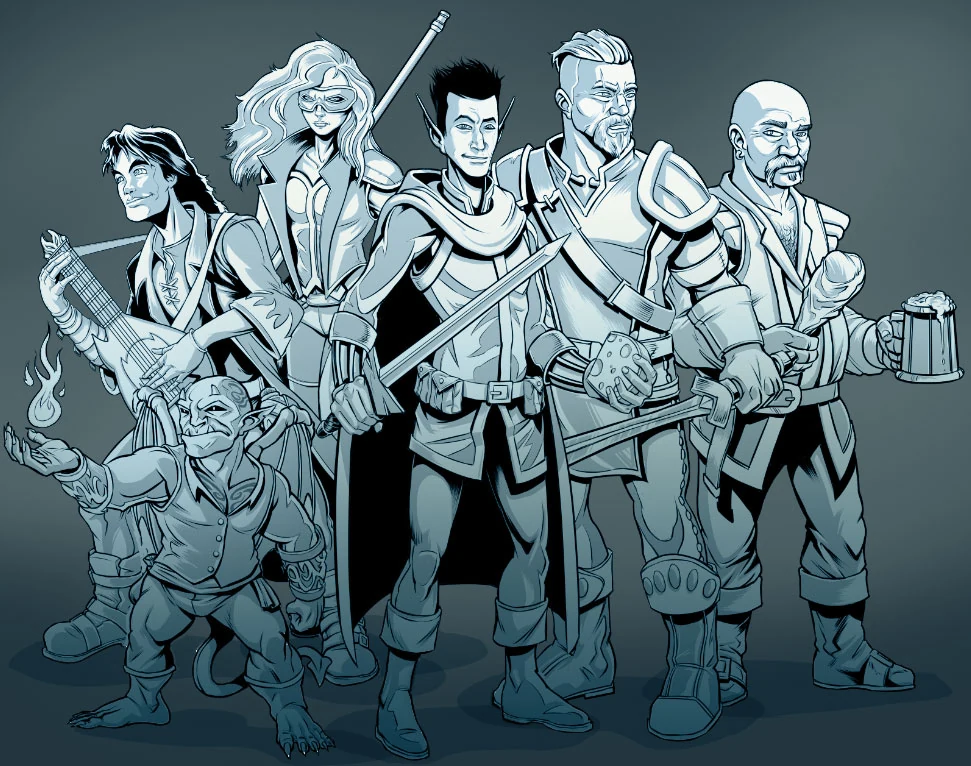
Stirculius and Ulf became part of a larger traveling party. Red Whisper carried secrets across the story. Argus and the demon Mortizan introduced another knot of family, loyalty, and concealed identity. Powerful Lords guarded pieces of the Constellation Armor while preparing for the cosmic dragon Ragnarock to return.
The project grew into a world of neglected regions, political damage, recurring catastrophe, and characters who understood only fragments of the pattern surrounding them.
Issue Two
BUILDING THE NEXT CHAPTER.
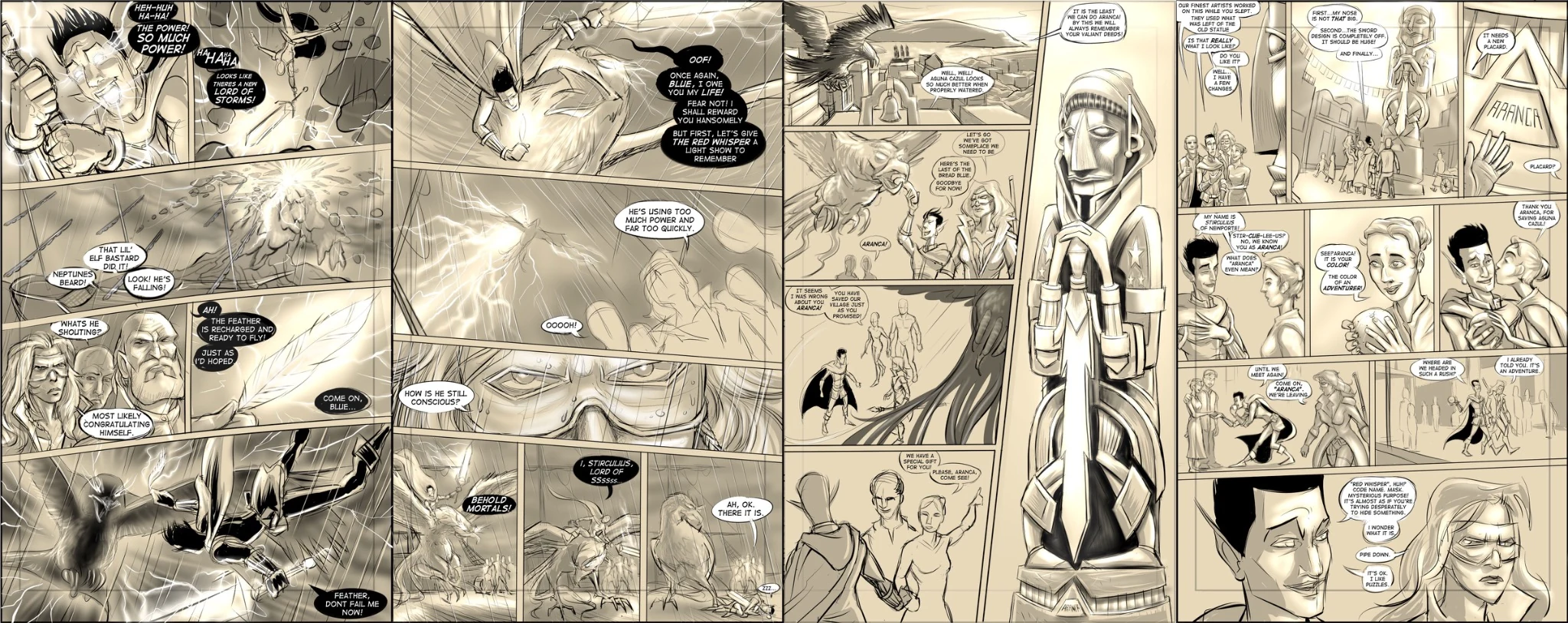
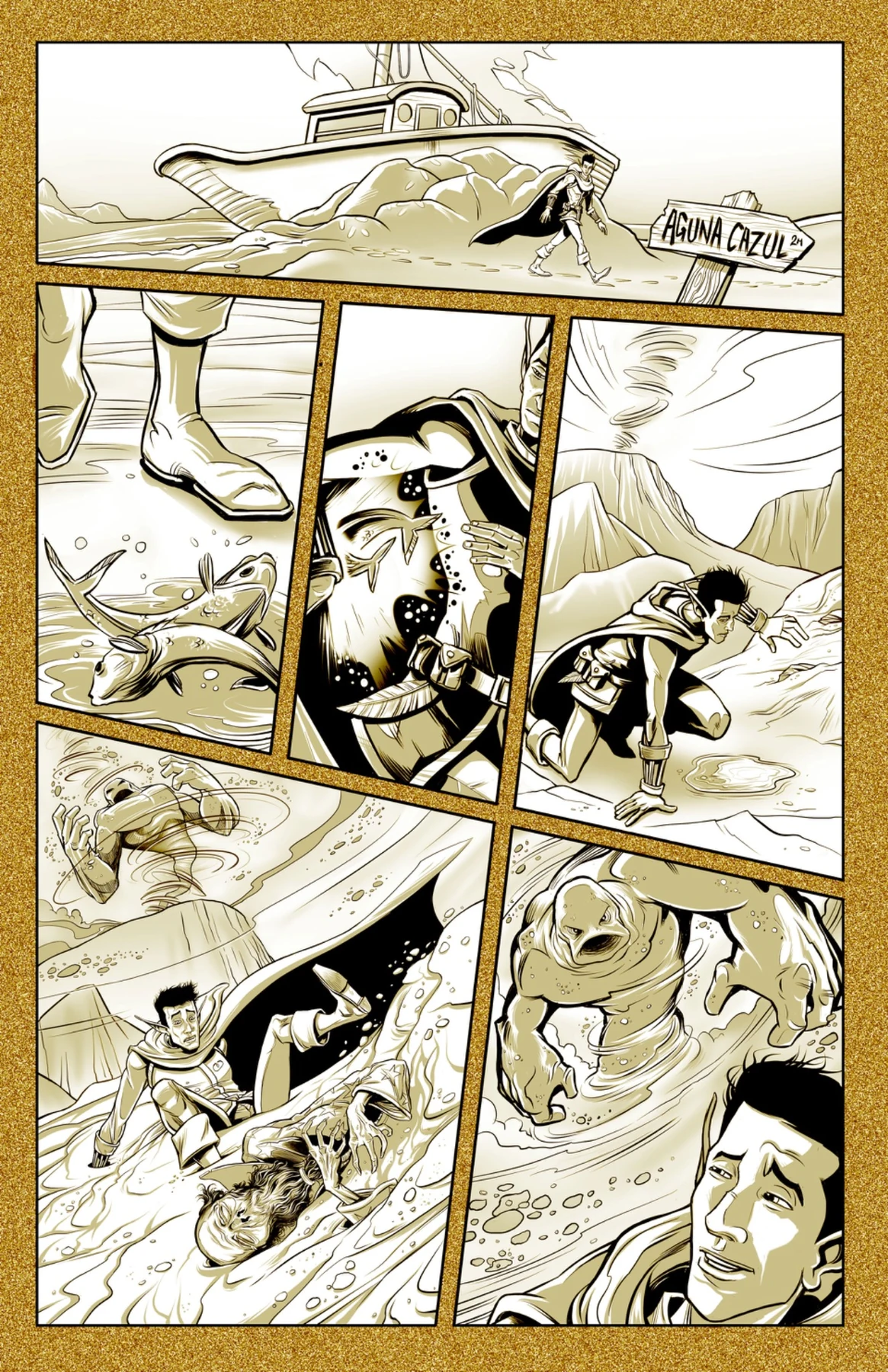
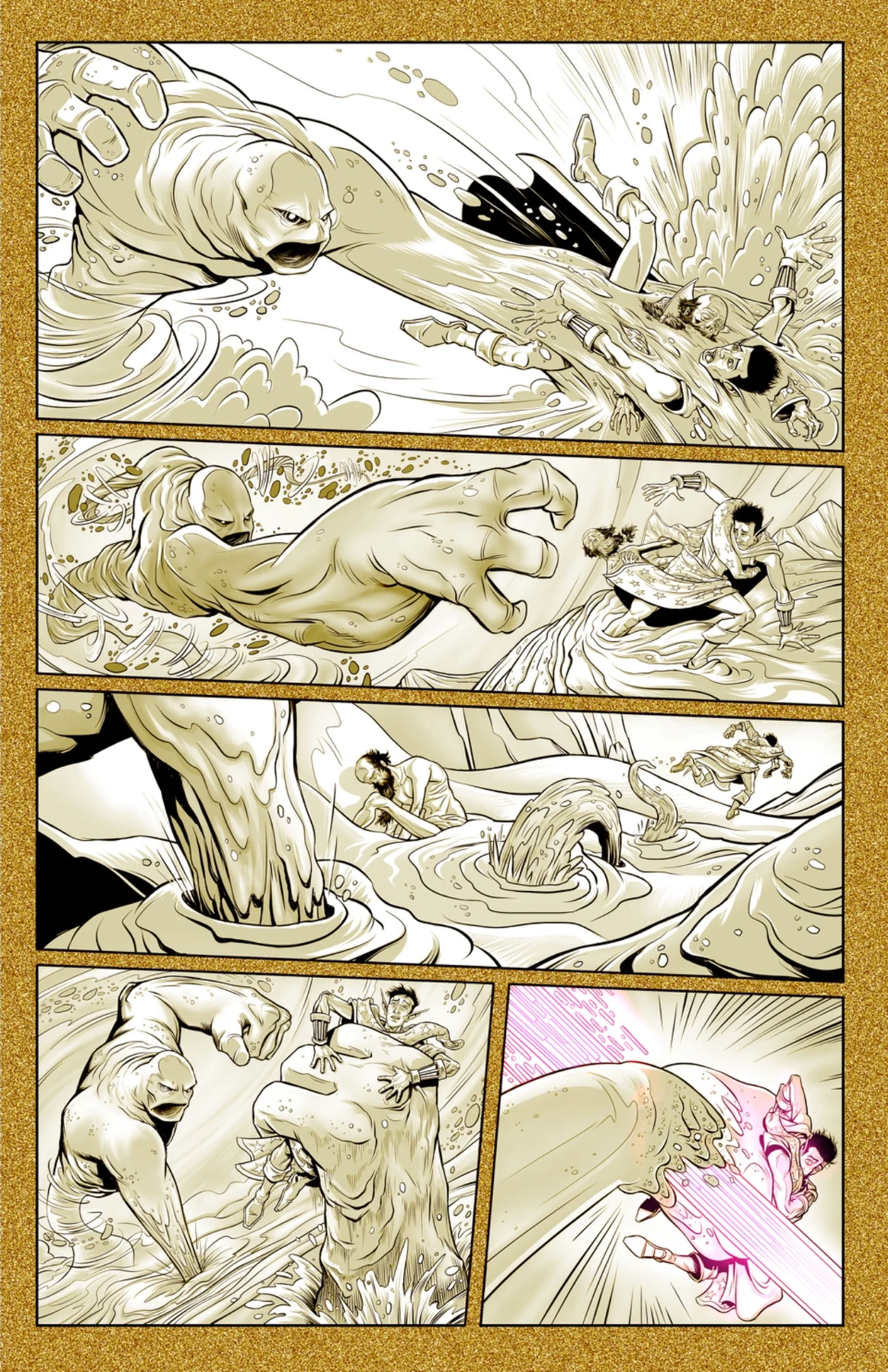
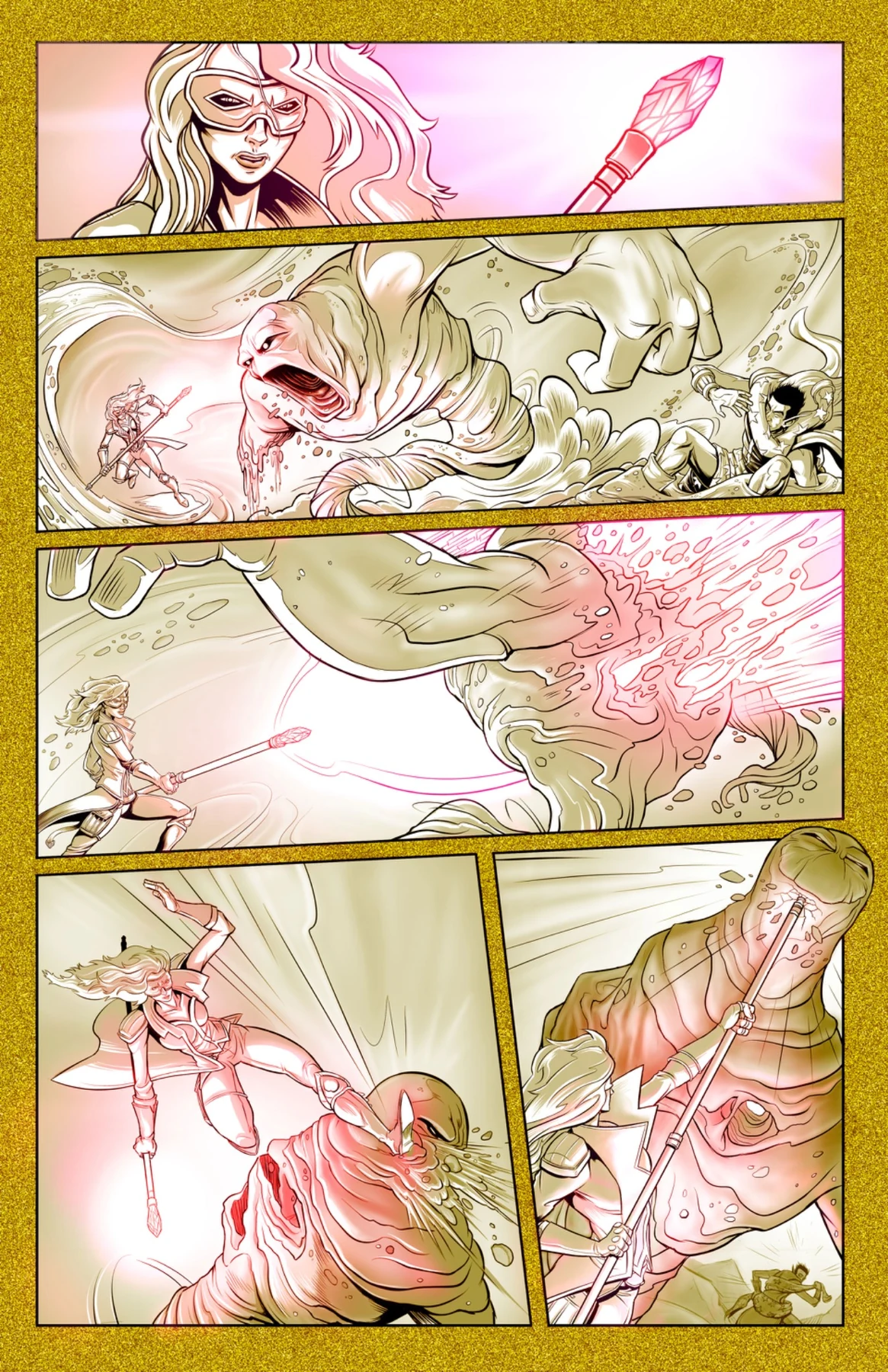
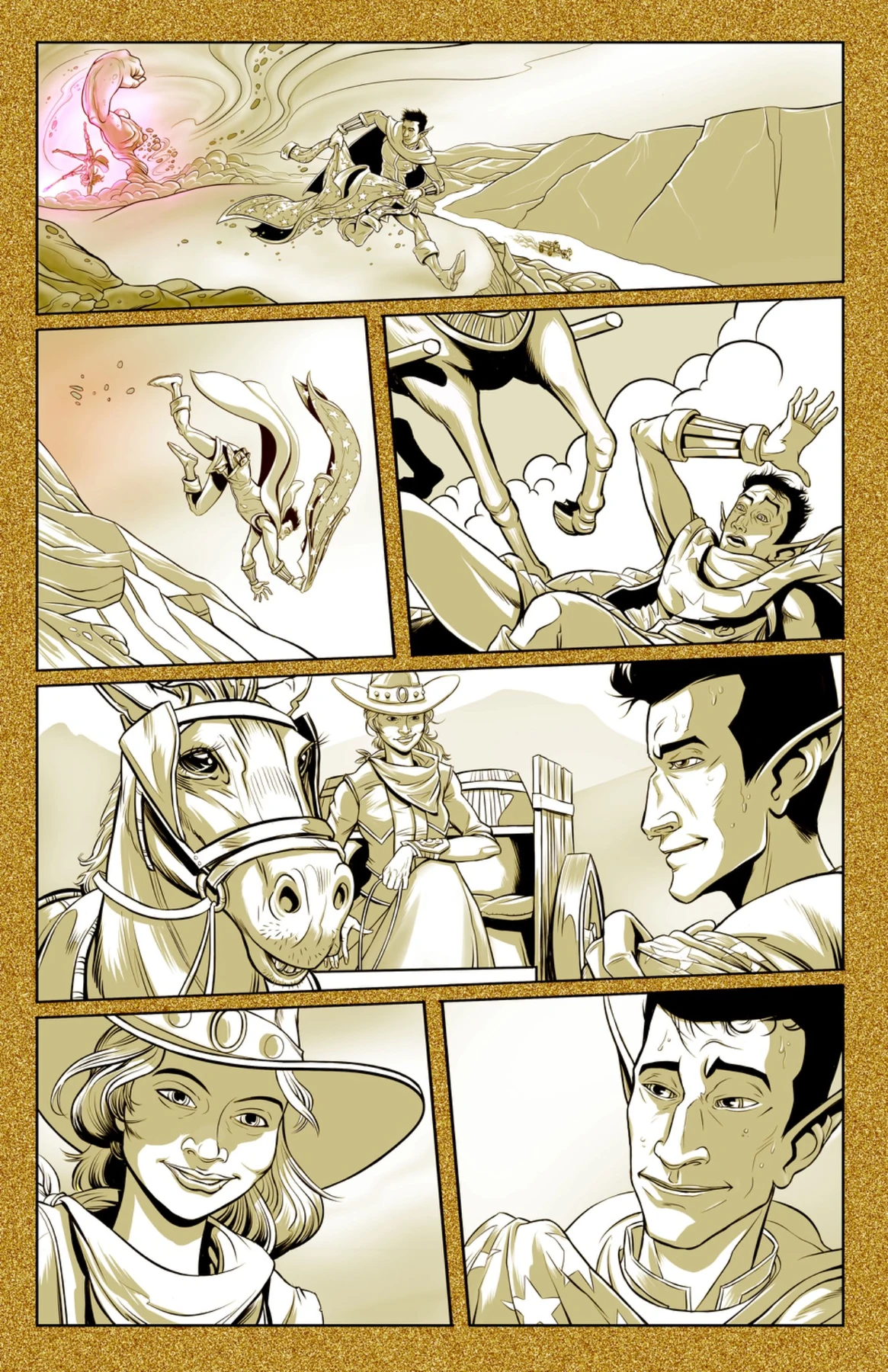
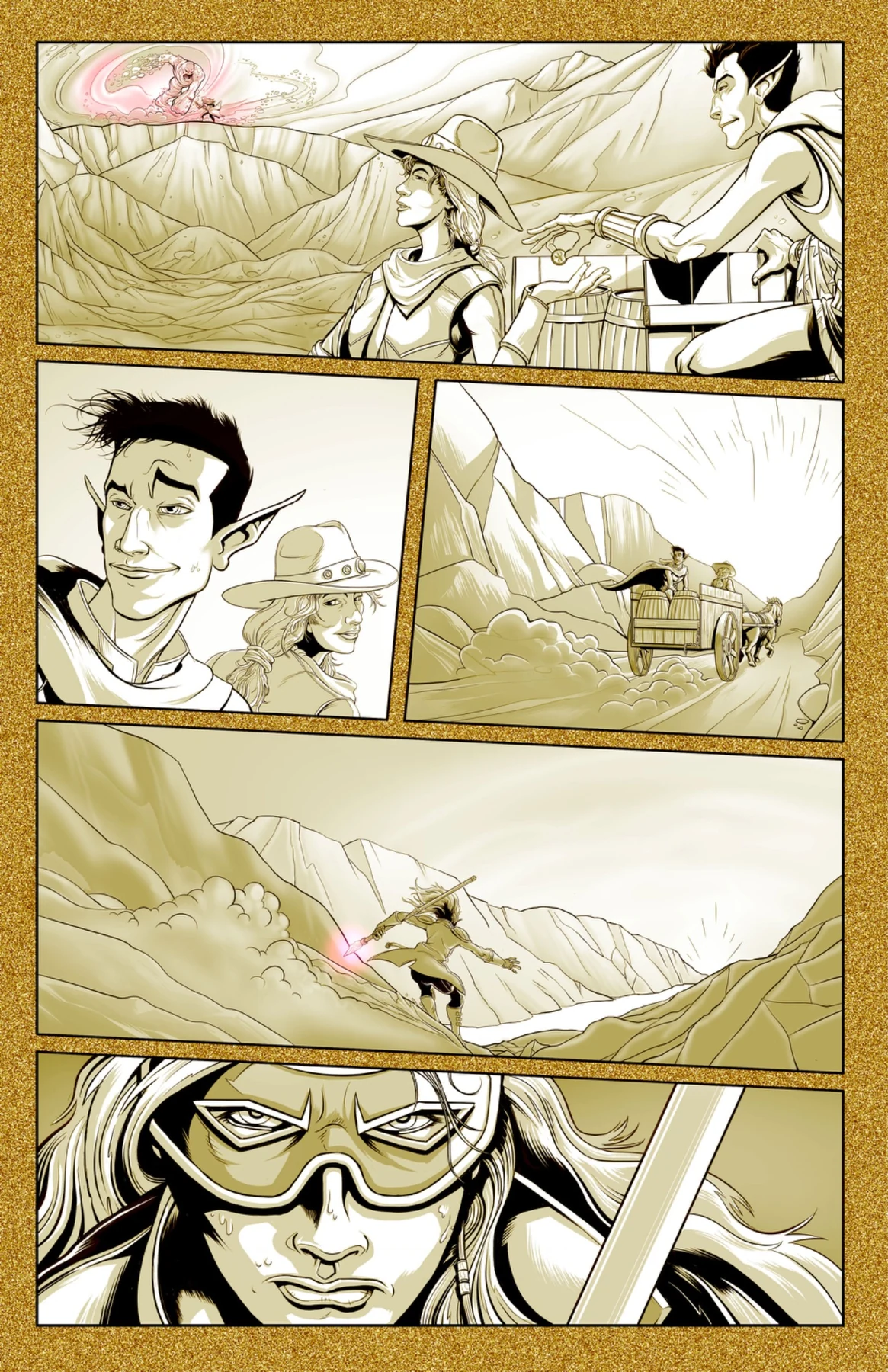
Issue two wakes Stirculius in the Dragon Flame Desert with no treasure, no water, and no cheese. He searches for the sword, survives a sand creature, steals a distinctive robe, and is mistaken for Cantelluvia, the Raincaller. Naturally, he turns the mistake into an opportunity.
I completed extensive layouts and began finishing pages with a restricted, location-specific palette. The issue has not yet been completed, but the material shows a story already staged through pacing, action, character beats, and visual rhythm.
Translation Test
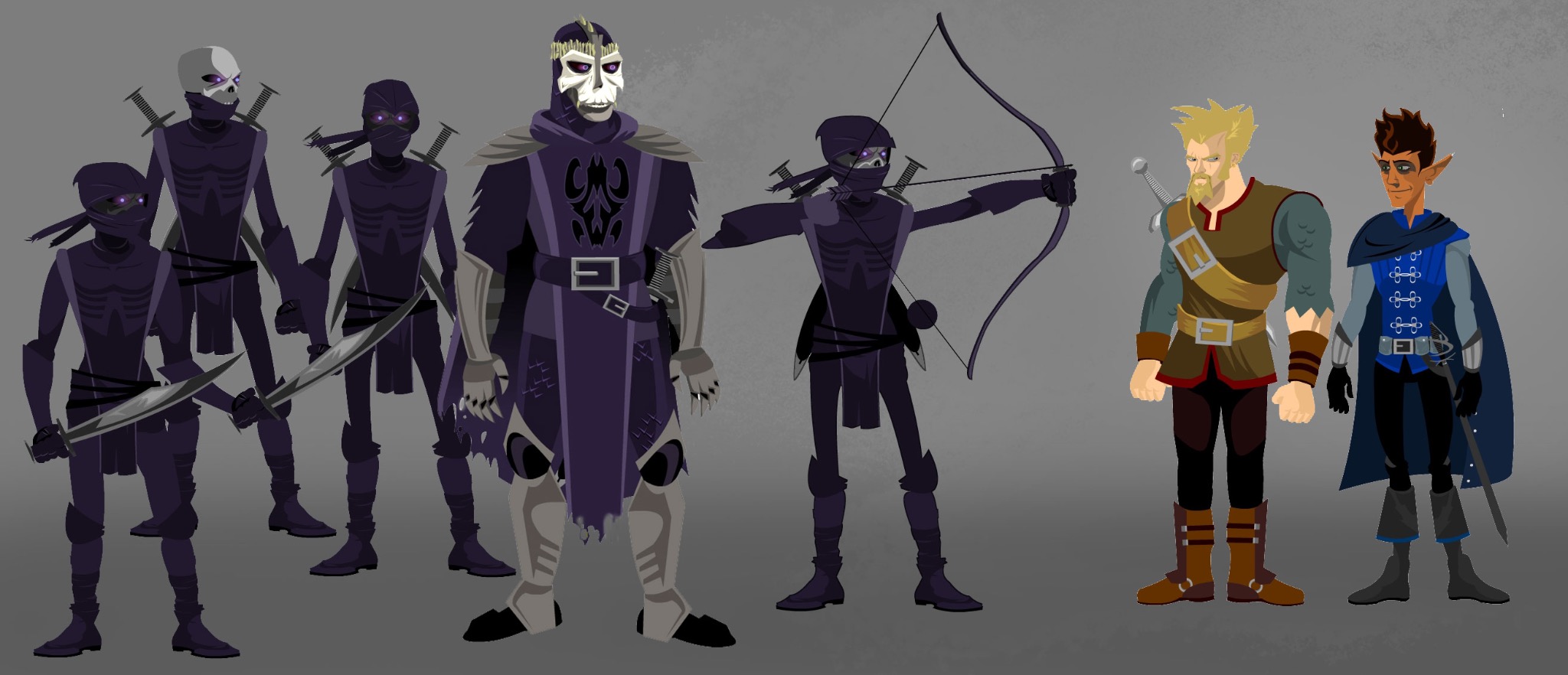
DESIGNING THE CAST FOR ANIMATION.
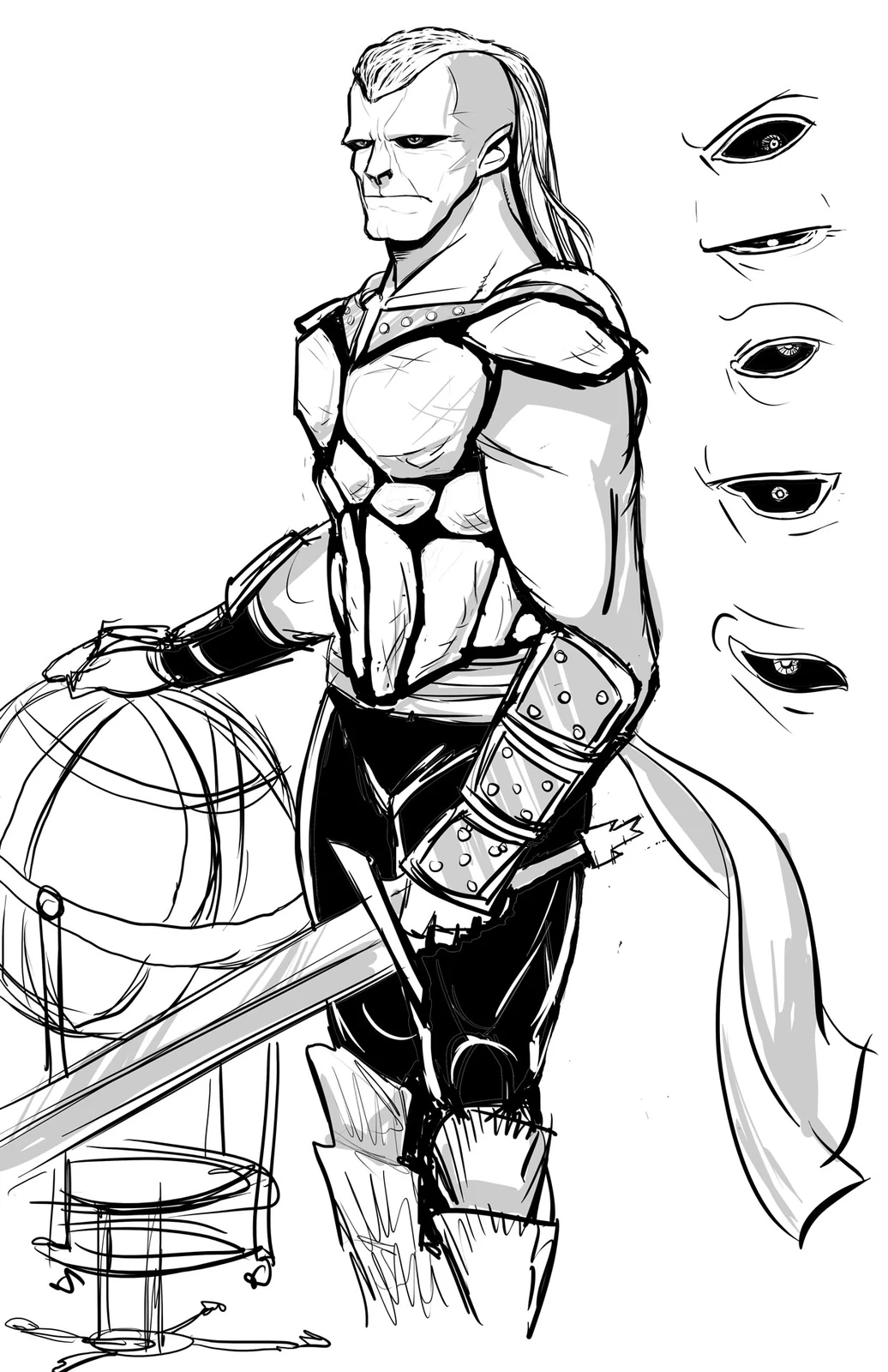
The animation adaptation simplified Stirculius and the supporting cast into cleaner silhouettes, broader shapes, and designs that could remain expressive with fewer marks.
It was an early demonstration that Ragnarock Tales could move between media while keeping its characters and world recognizable.
A World Searching for Its Form
FROM PAGE TO SCULPTURE.
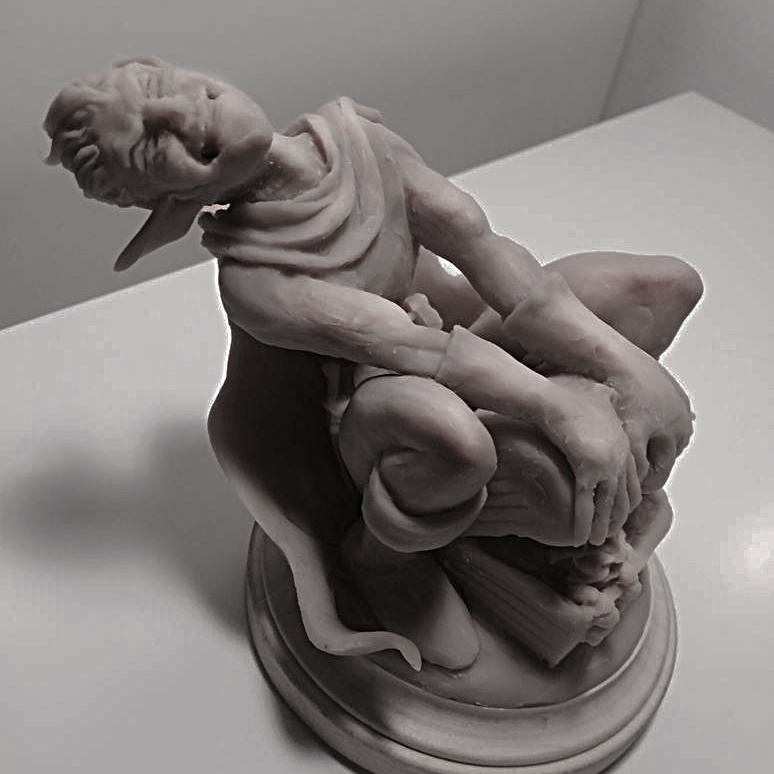
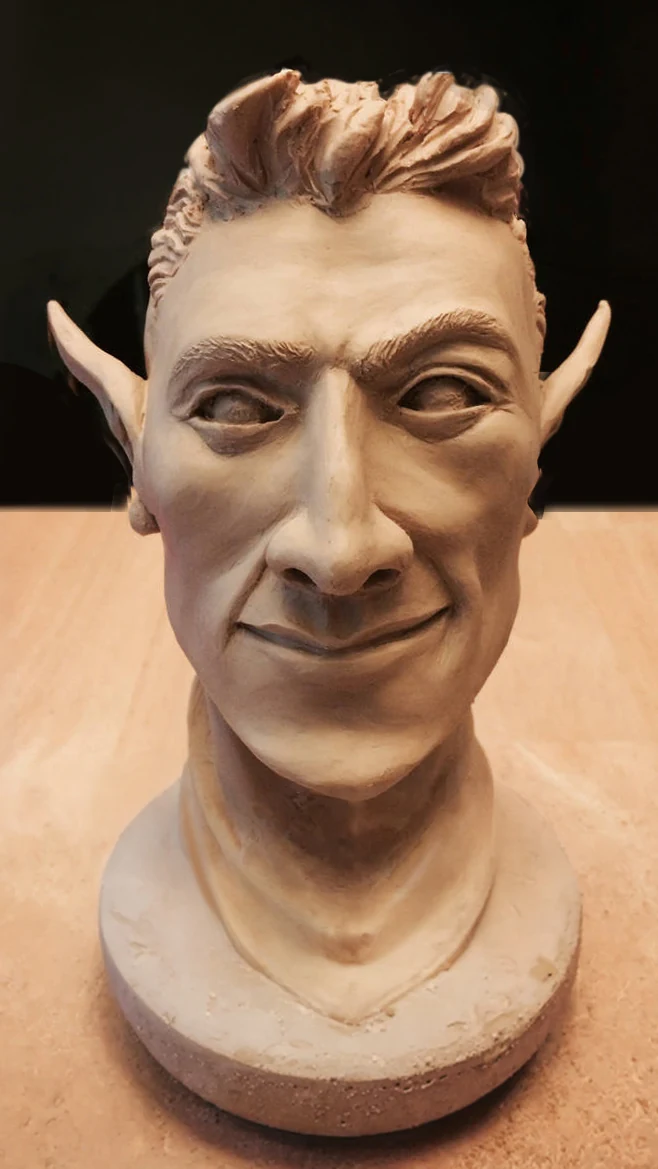
Ragnarock Tales repeatedly crossed media. Stirculius became animation art, sequential pages, painted illustration, a portrait bust, and a small narrative sculpture.
These were not separate curiosities. Each was another attempt to discover what the character could become and what kind of object might carry the world most effectively.
Visual Evolution
A STORYWORLD THAT CONTINUES TO EVOLVE.
Ragnarock Tales began in a denser fantasy-comics mode built on detailed rendering, more fully described environments, and a stronger commitment to showing everything on the page.
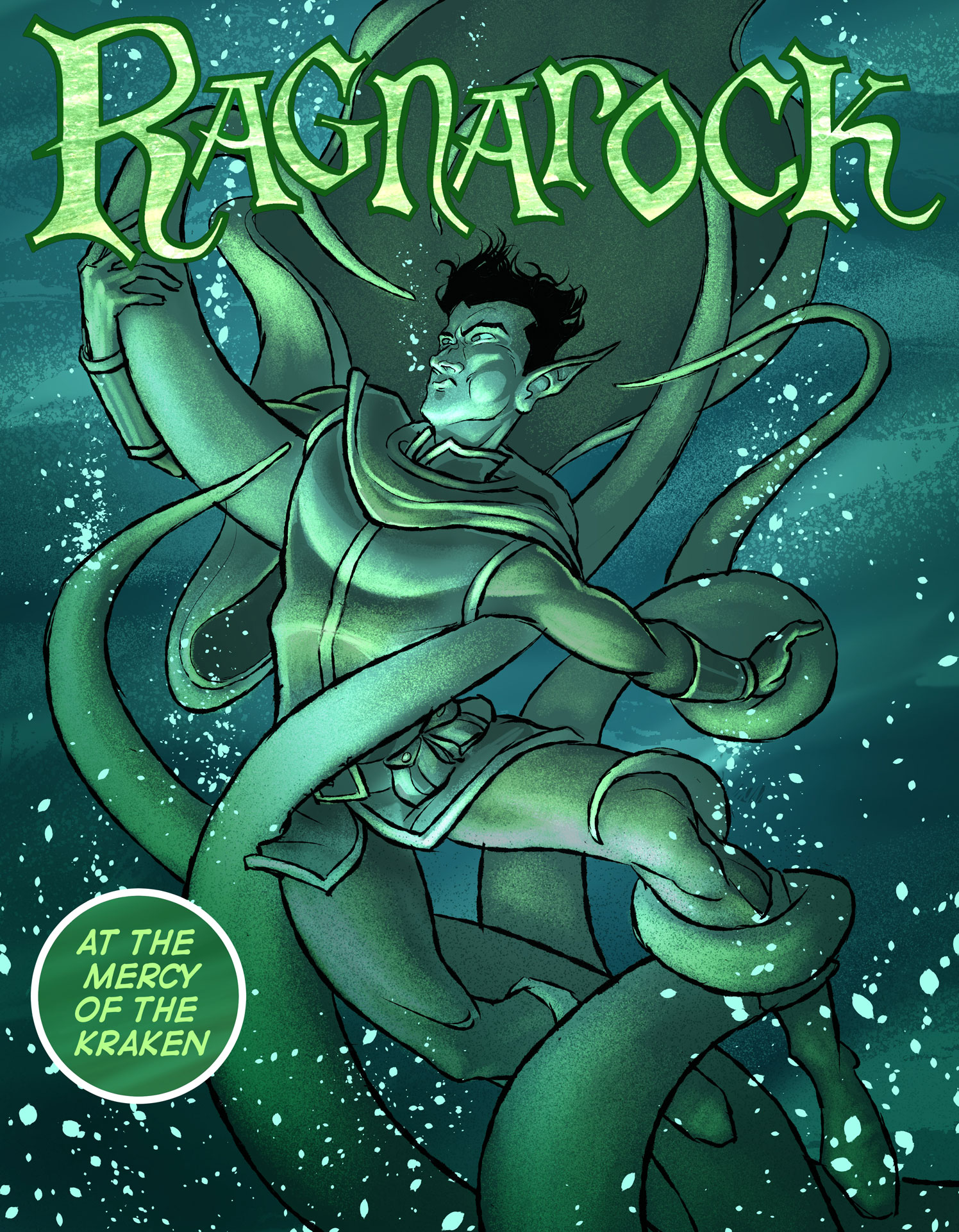
Over time, the visual language started to shift. Later images pushed toward stronger atmosphere, more selective detail, clearer focal hierarchy, and a rougher, more expressive surface.
Mercy of the Kraken sits inside that transition. It still belongs to Ragnarock Tales, but it already points toward a more distilled and emotionally directed way of building the image.
If I return to the world now, I would preserve the emotional core and mythology while translating it through the more selective, atmospheric visual language I use today.
Established a detailed fantasy-comics foundation.
Loosened the drawing and opened the image emotionally.
Turned selective detail and atmosphere into a repeatable system.
Related evolutions
Continue Exploring

See something worth building on?
Bring the strange problem, the half-formed world, the campaign, product, or story that needs a clear visual form.
Start a Conversation