The Real Subject
When the dream changes shape.
On the surface, Icarus is about a man trying to reach the moon. Underneath, it is about what happens when a dream survives long enough for life to put something more important in front of it.
Adam’s flight is ambition, escape, obsession, and self-invention. But the question changes as the story develops. What are we really chasing when we say we are chasing our dreams, and what happens when we discover there is something more worth chasing?
The story lives in that tension between aspiration and responsibility. It understands the beauty of wanting more, but it also understands that a dream cannot remain untouched by the life built around it.
Personal Mythology
A personal story encoded in myth.
Icarus uses mythic language to tell a personal story without turning it into literal memoir. Adam, the Muse, the moon, the city, the machine, and the fall all carry emotional weight, but none of them have to explain themselves completely.
That symbolic distance matters. It allows the story to move like a dream while still feeling emotionally precise. The characters are not realistic portraits. They are parts of an inner argument: ambition against responsibility, escape against devotion, the younger self against the person life has forced into being.
The result is intimate without becoming confessional.
Sequence
Rhythm and flow.
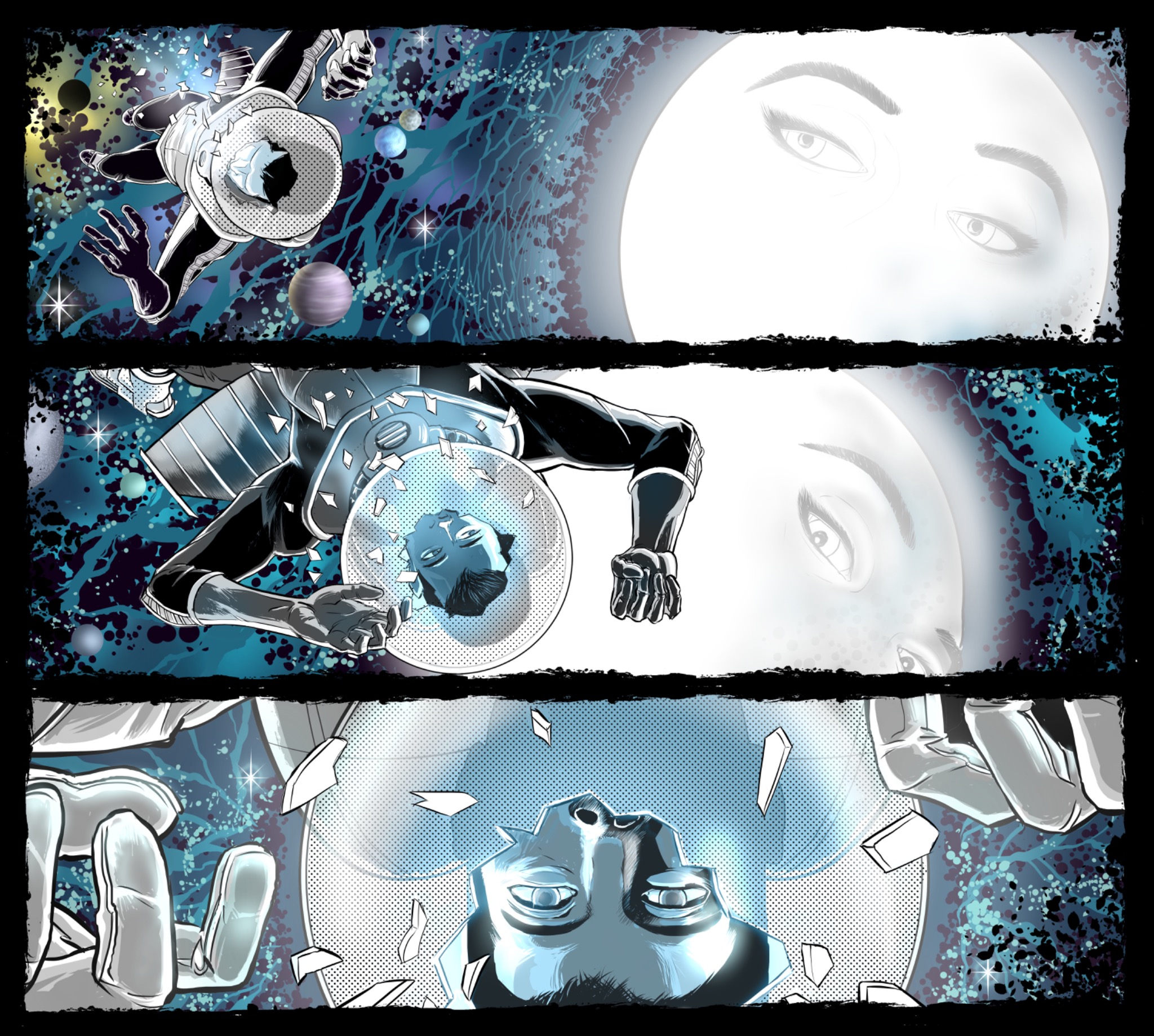
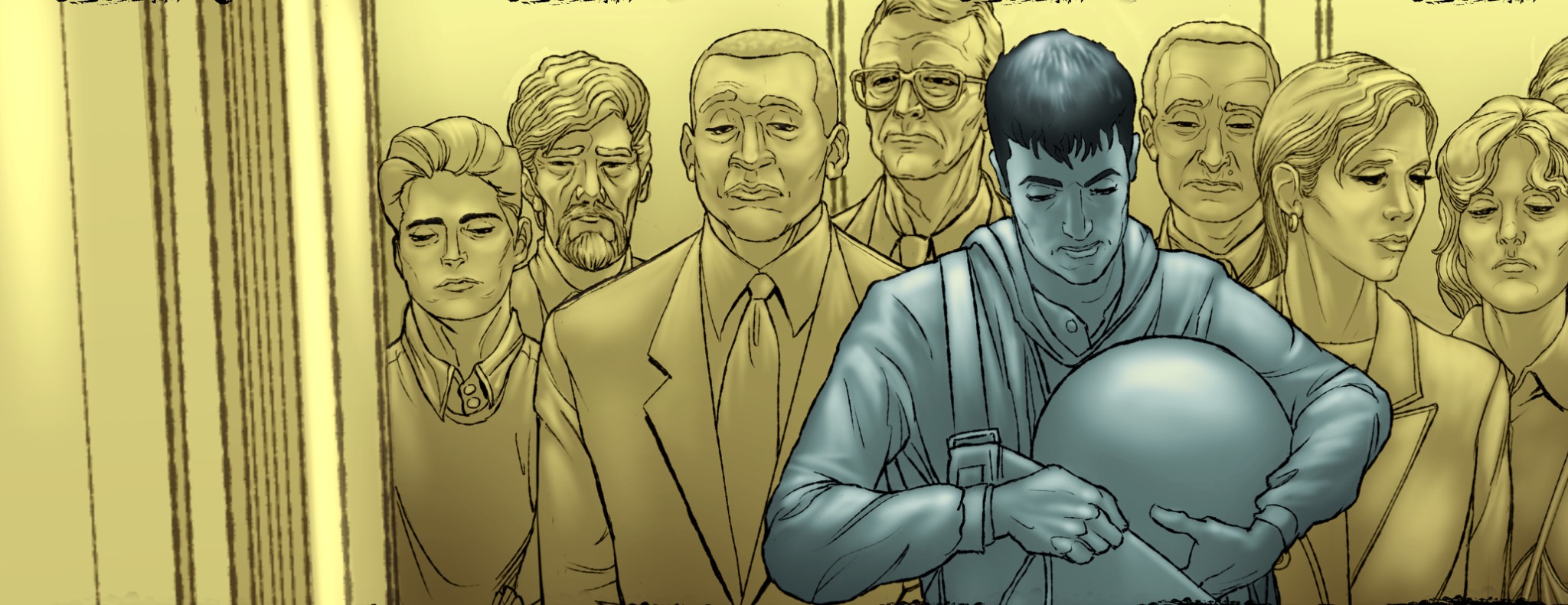
Icarus is not built around isolated images. A single panel can show a beautiful moment, but the story’s force comes from what changes between panels: the cut, the pause, the repeated composition, the breath before impact. The book depends on rhythm.
The Turn
The true story emerges.
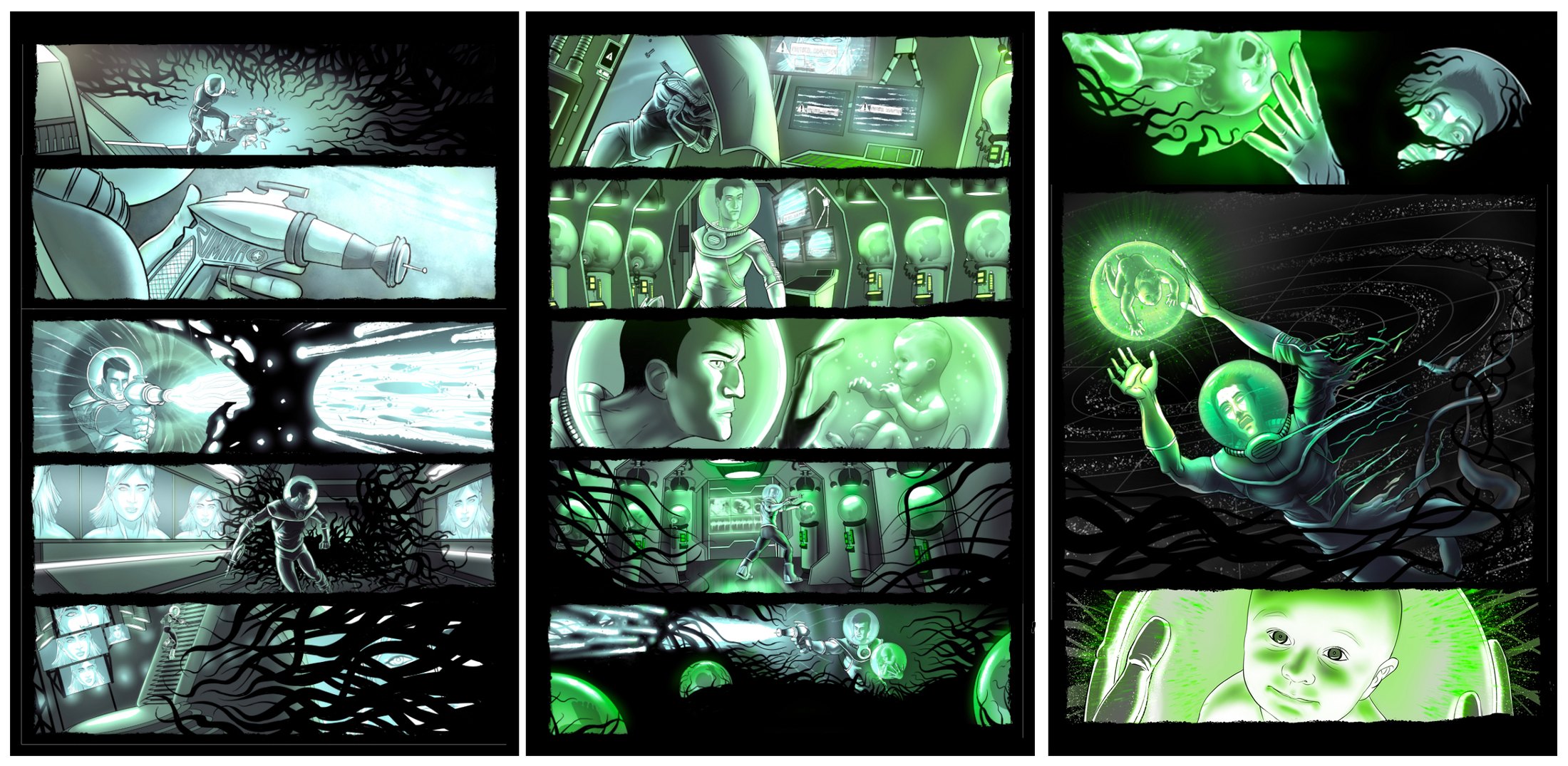
The original ending belonged to an older version of the story: darker, colder, and more circular. It made sense when Icarus was still about ambition collapsing into delusion.
But the book changed as the pages were drawn. The act of making it revealed a different truth. The story was no longer only about flight, failure, or chasing the moon. It had become about responsibility, inheritance, and the person Adam had become by the time he reached the end.
The ending was not swapped out for something more hopeful. It was discovered. The old ending stopped being honest, and the final pages had to follow the truth the work had revealed.
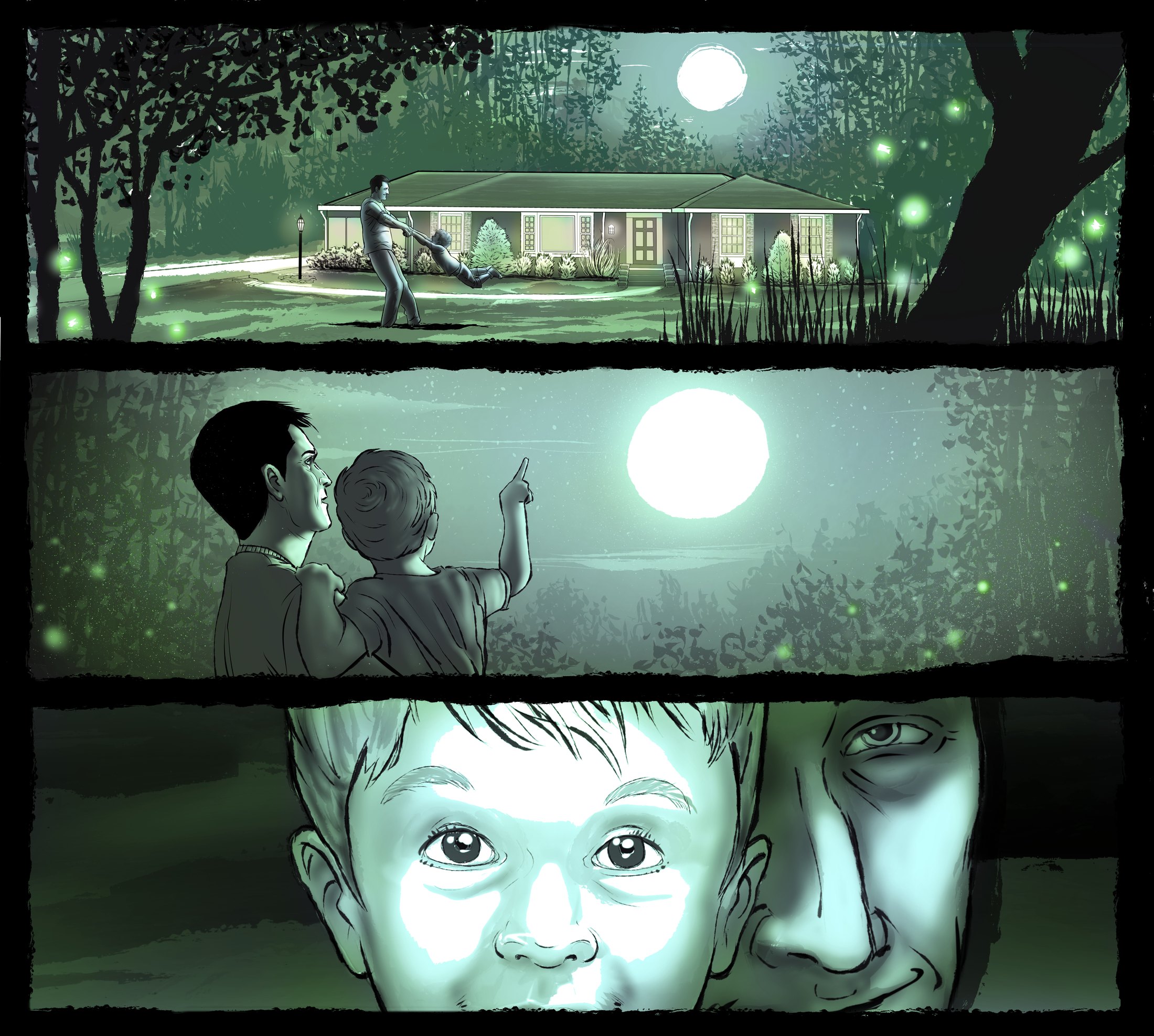
Alternate Ending
Reaching for the moon.
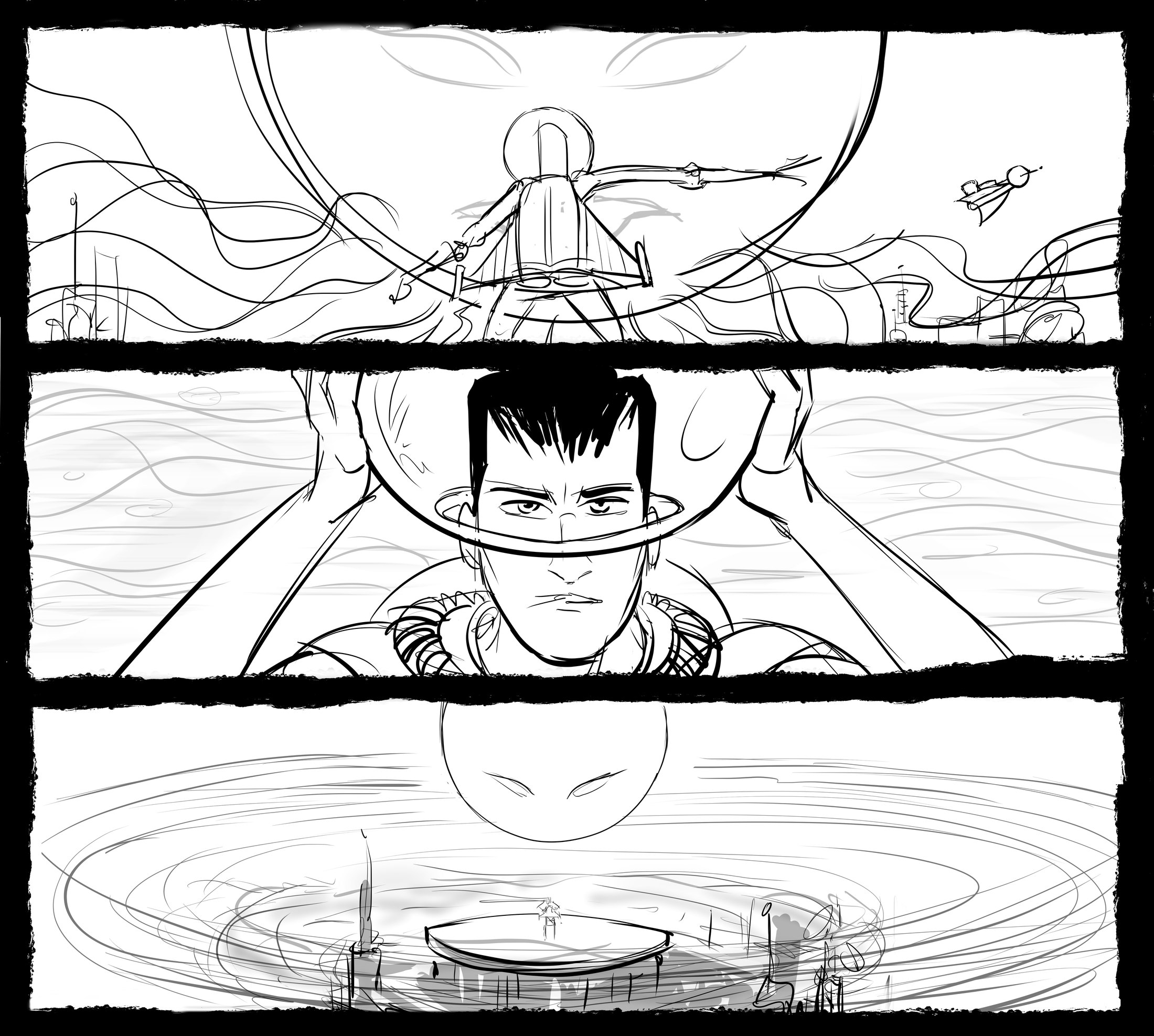
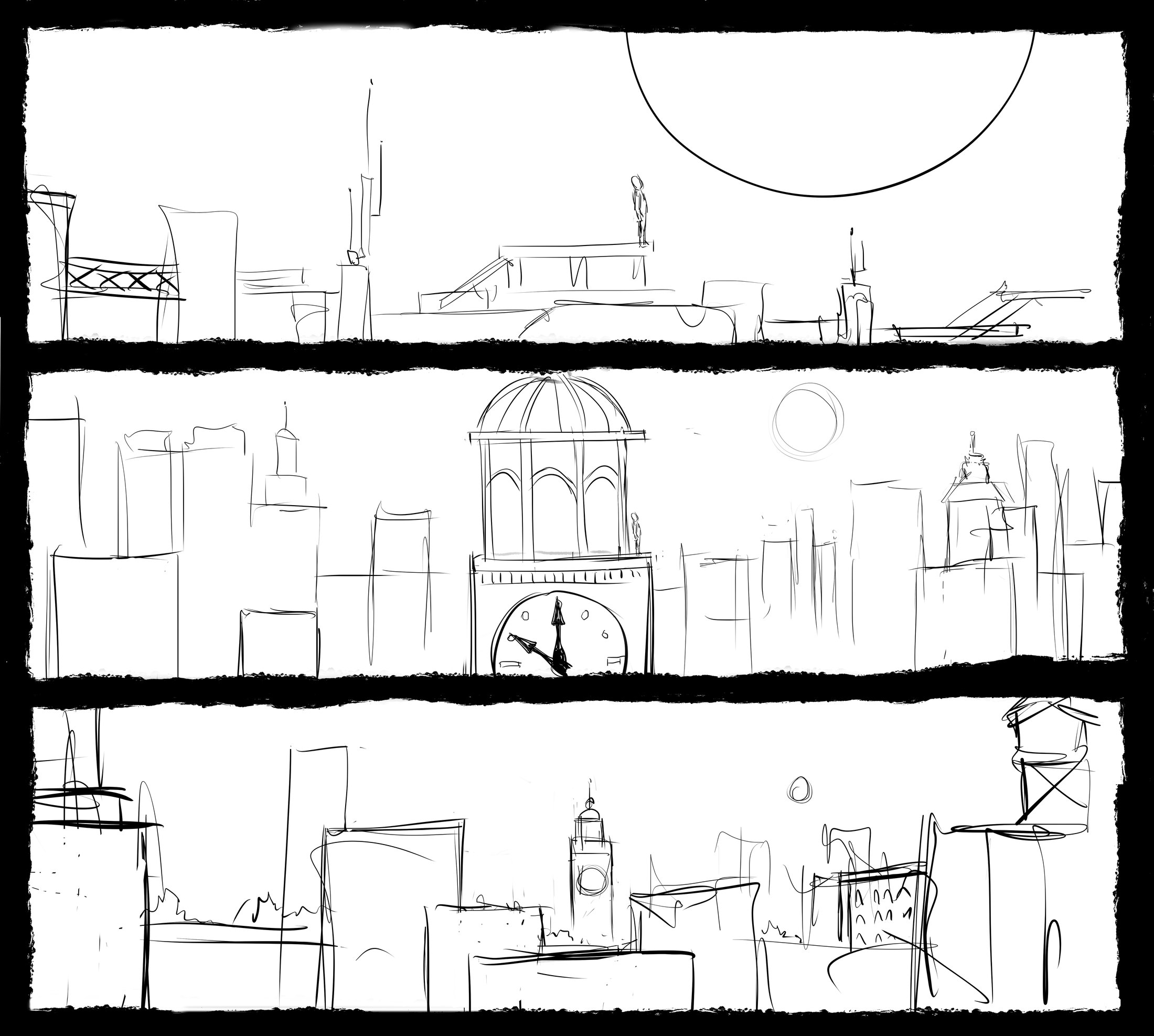
These alternate-ending pages are not presented as mistakes. They show the earlier story clearly: colder, more circular, and more final. The finished book changed because the old conclusion no longer matched the truth the work had uncovered.
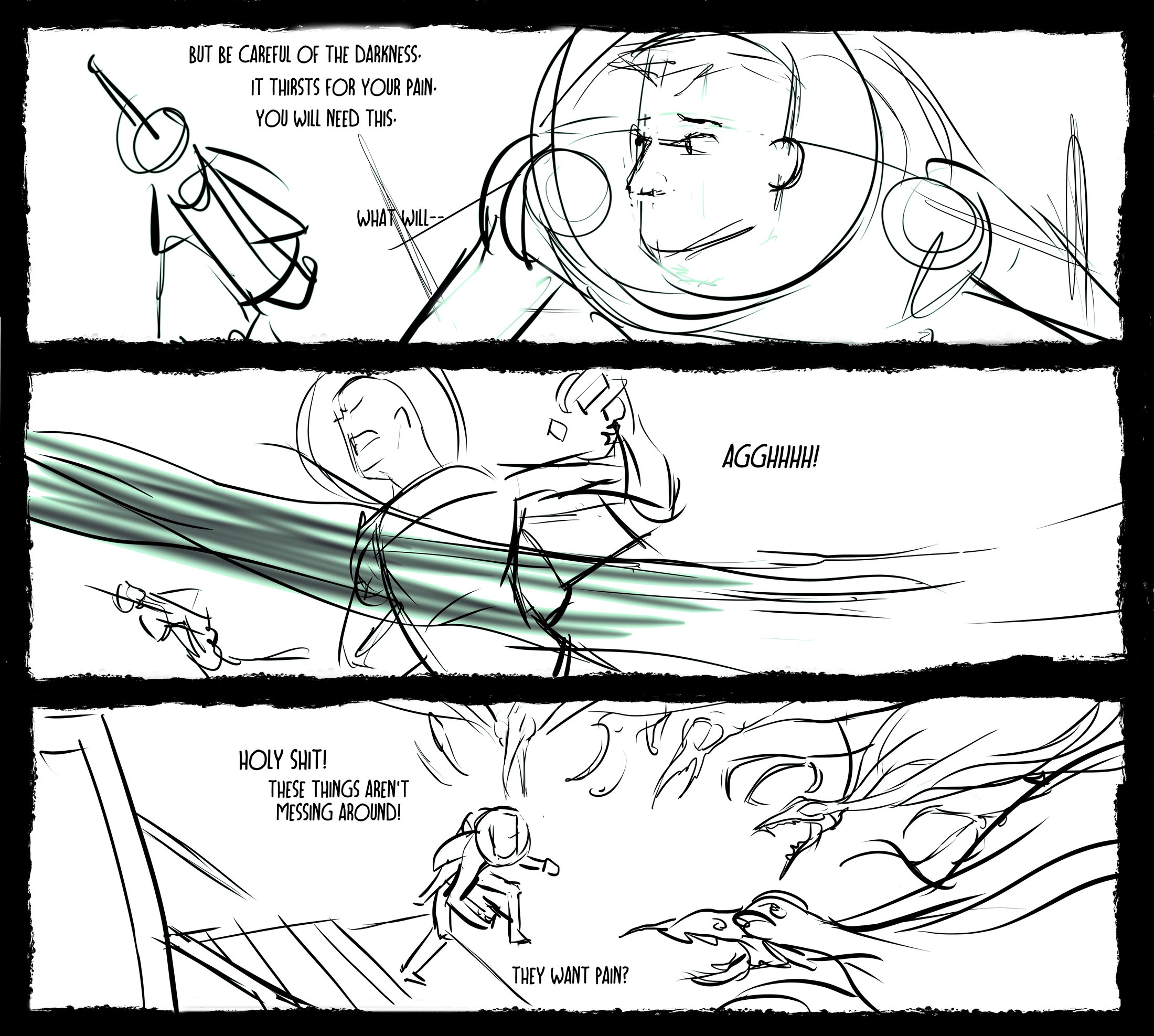
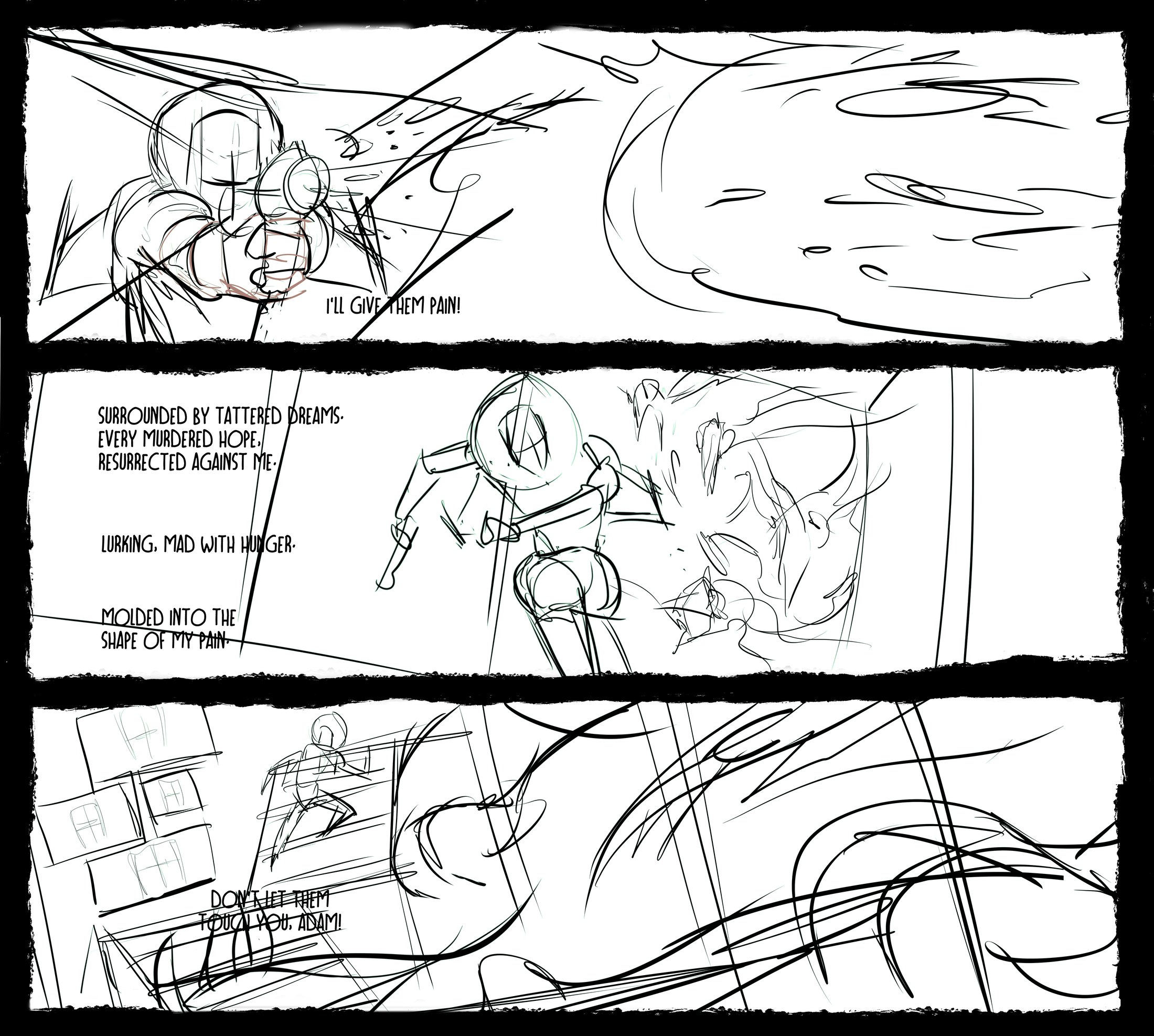
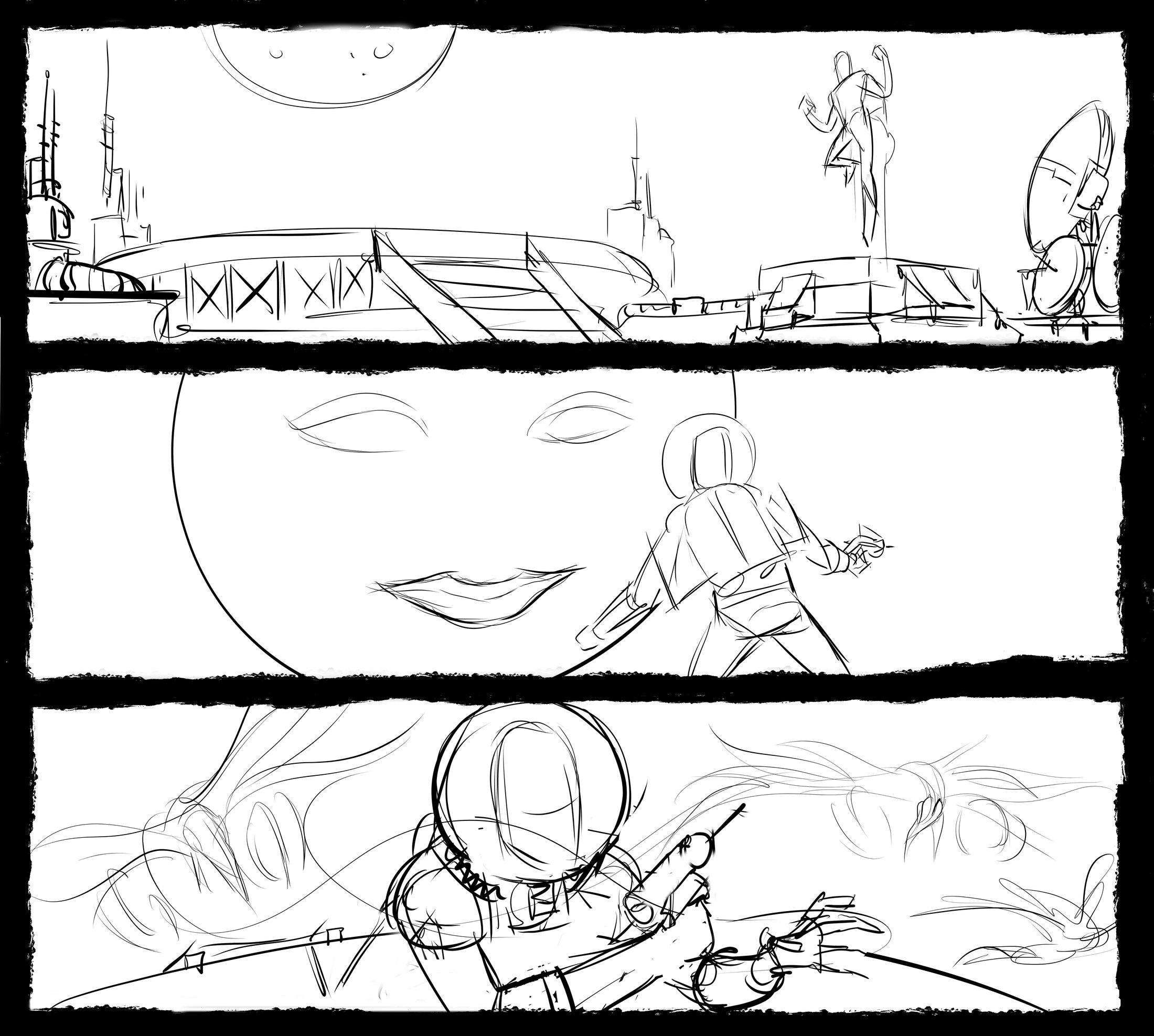
The Finished Book
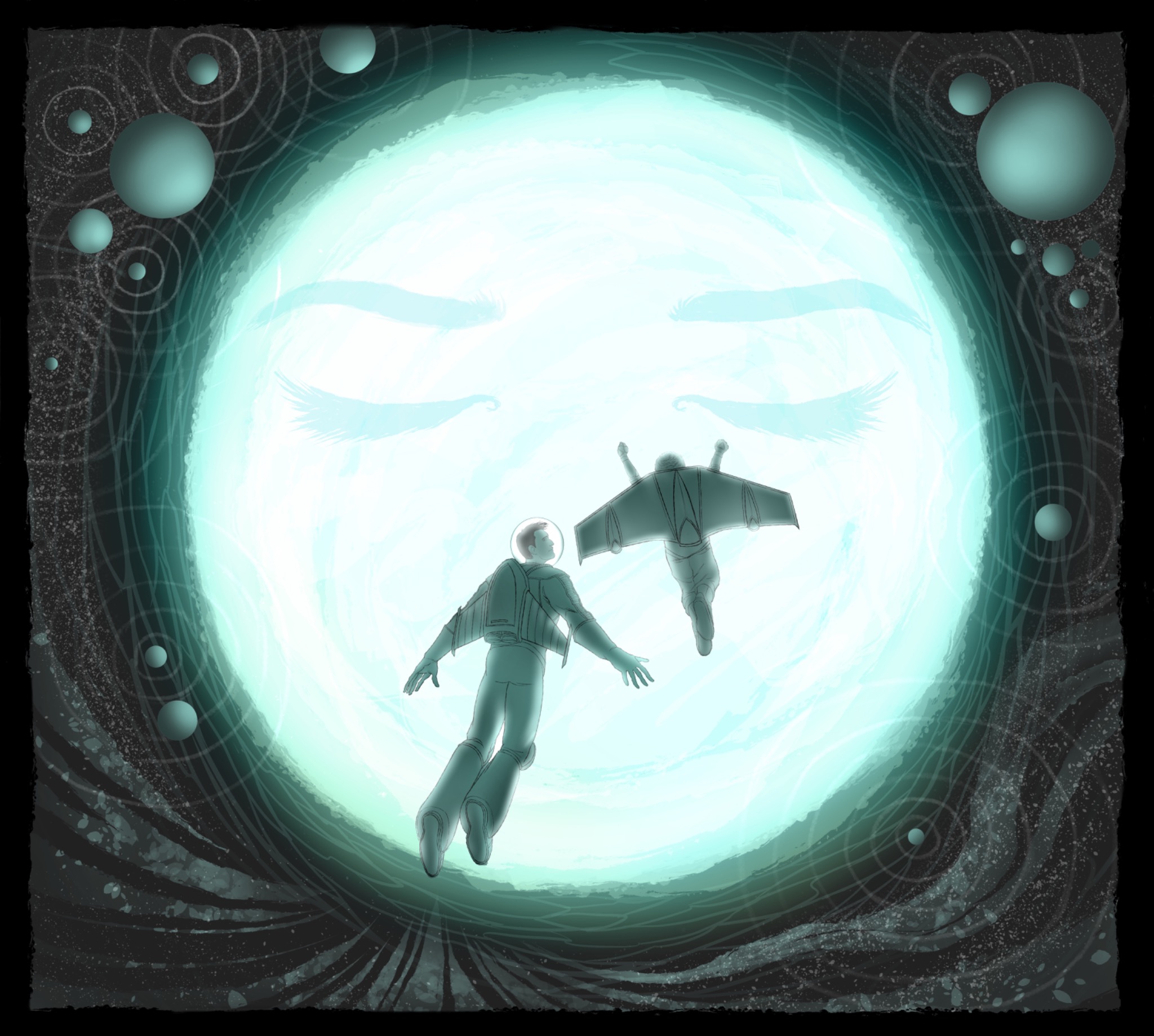
The finished book carries the change.
That discovery changed the emotional shape of the whole book. The final version does not reject the younger story. It absorbs it.
The ambition is still there. The fall is still there. The longing is still there. But the ending no longer treats failure as the final word. It asks what lessons we carry forward after the dream changes shape. Who are you when you realize you are living in a different story than the one you imagined for yourself?
That is why Icarus feels personal without needing to explain every symbol. The meaning arrives through the finished form.
Connected Craft
The form had to change when the truth changed.
Icarus shows how image, structure, pacing, and revision can work together to make a personal story feel larger than autobiography. The book is not powerful because it explains the creator’s life. It works because private experience has been transformed into a visual mythology someone else can enter.
Some stories need spectacle. Some need restraint. Some need to be planned carefully. Some reveal their real meaning only after the work is already underway. The craft is knowing when to follow the outline, and when to listen to what the page is telling you.
Cinematic Restraint
The widescreen structure gives the story rhythm, control, and emotional focus.
Personal Mythology
A private conflict becomes a symbolic world of flight, failure, longing, and inheritance.
Truth Over Outline
The ending changed because the original conclusion no longer matched what the story had become.

Need a story shaped by image, rhythm, and meaning?
SirViz builds visual narratives that use form, pacing, and craft decisions to make the story’s deeper purpose visible.
Start a Conversation