The Real Subject
The burden of grief.
At its center, The Hollow is about the danger of refusing to let go. Loss leaves residue. It changes the shape of rooms, relationships, memories, and choices. Over time, grief can harden into an invisible burden, distorting decisions and keeping people trapped inside the wound.
The supernatural danger beneath Cronomer Valley grows from that open emotional wound. Pain becomes a threshold. If it is protected too long, fed too carefully, or mistaken for love, something destructive can pass through.
Human Engine
Echoes of tragedy.
Samantha is not an occult detective chasing a case. She is a woman who has learned to live with sensitivity: to people, to rooms, and to the emotional residue tragedy leaves behind.
That sensitivity makes her useful, but it also makes her vulnerable. She notices what others miss, which forces her to examine her surroundings more carefully than most.
In The Hollow, perception is not a superpower. It is a burden of attention.
The Object
Designed for discovery.
The format matters. The Hollow was built as a compact illustrated prose object: short enough to be read in one sitting, but substantial enough to feel like a recovered piece of a larger world.
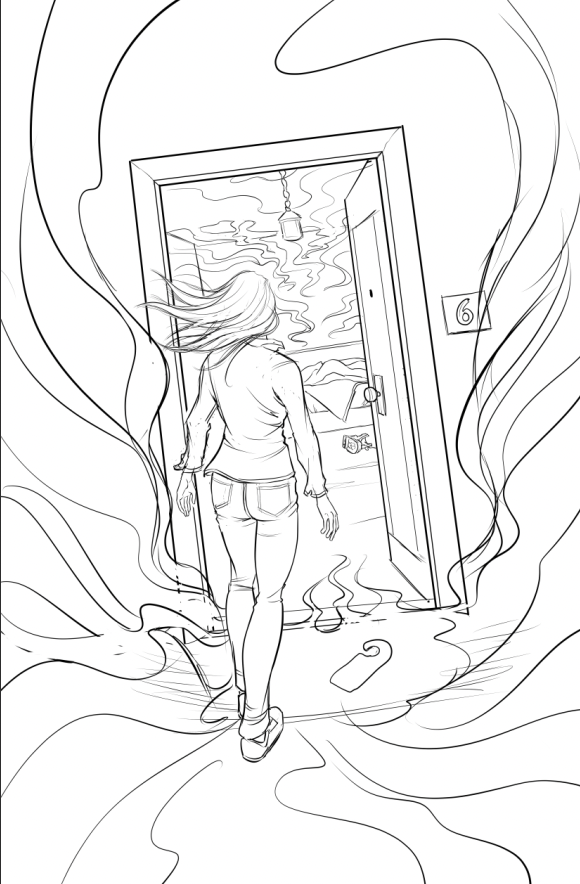
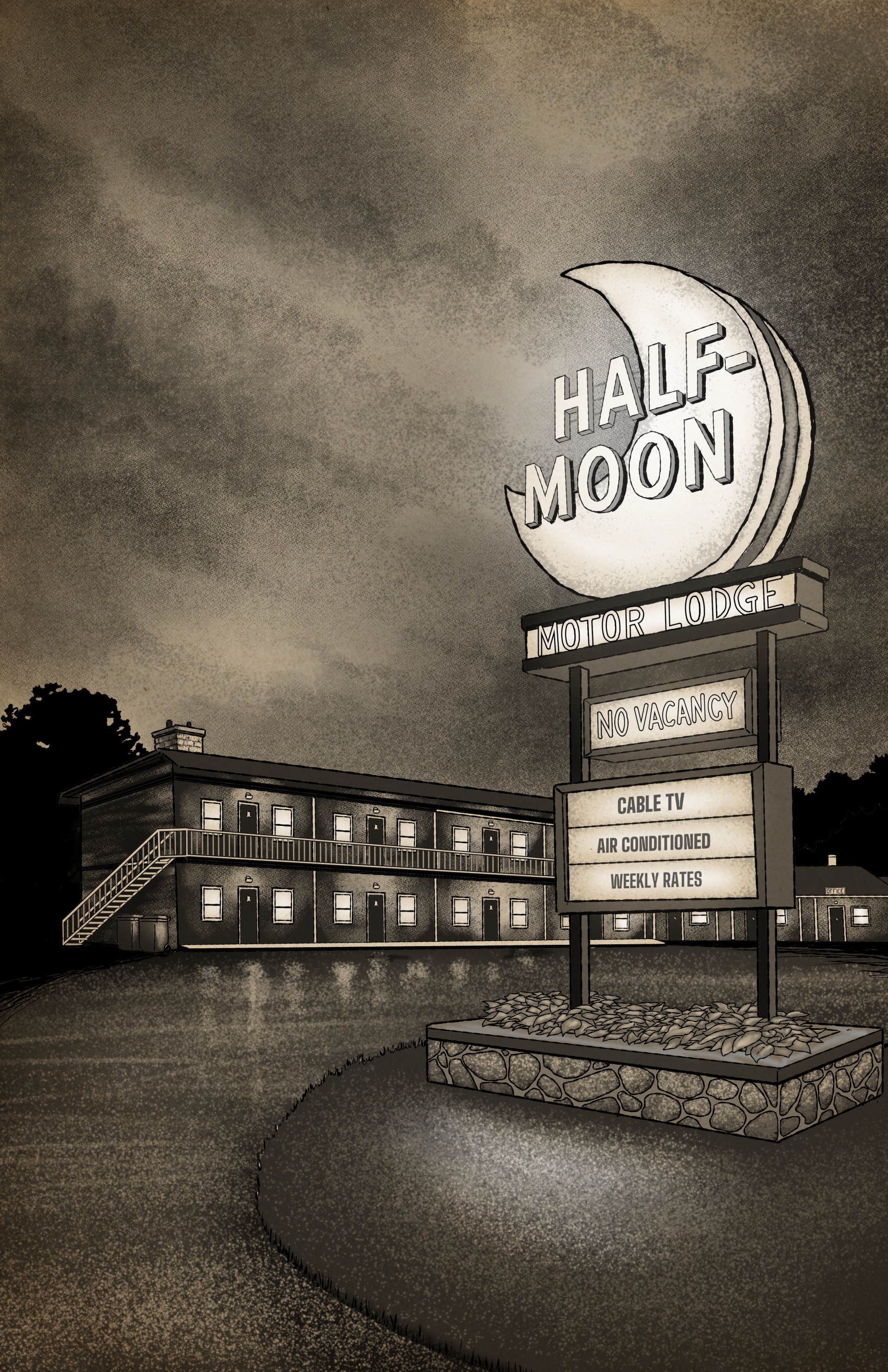
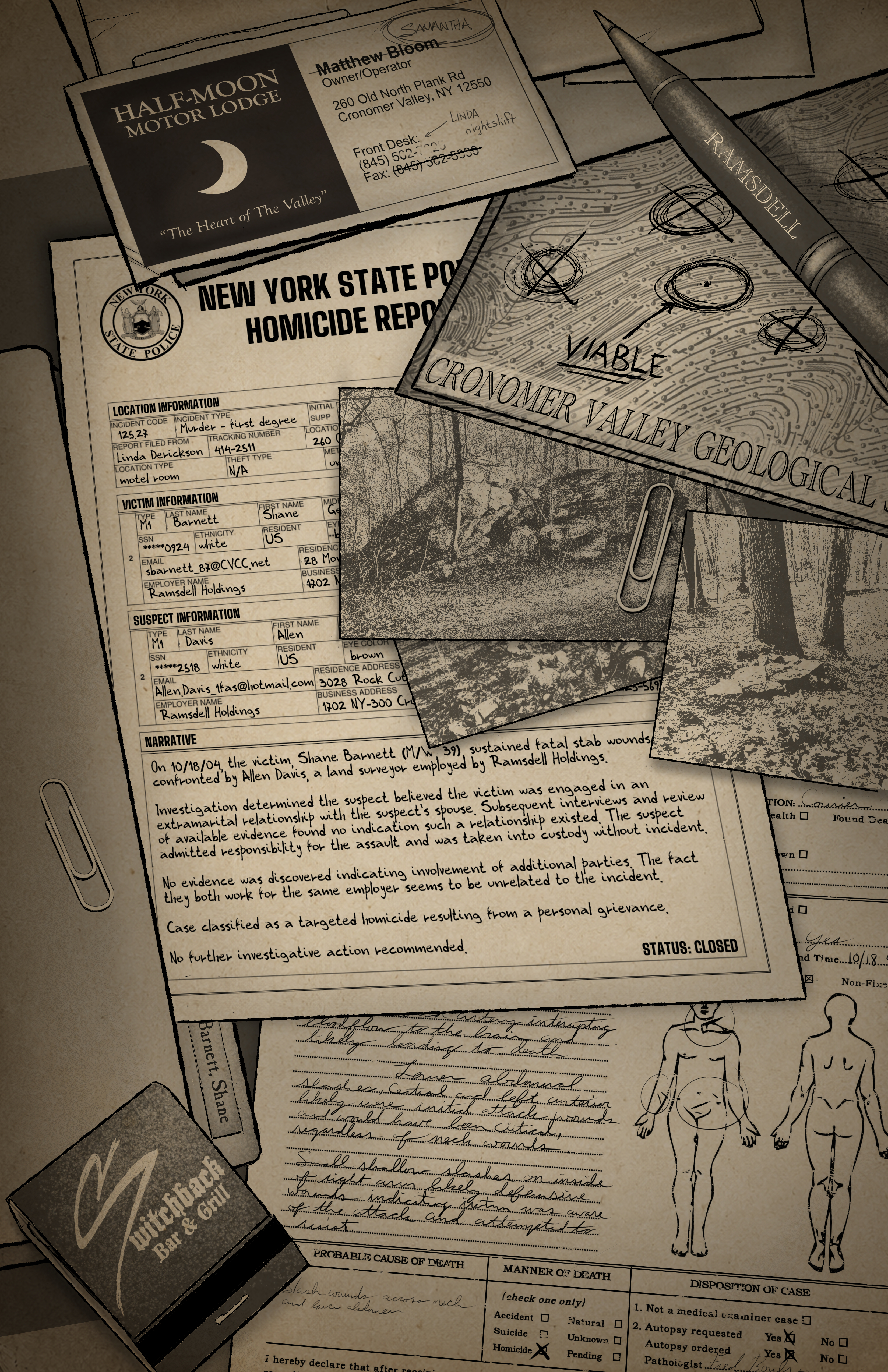
The illustrations do not decorate the prose. They shape the evidence around it: the motel desk, the Half-Moon exterior, the interior material, and the printed form all help the book feel discovered after the fact.
The result is not just a story. It is an artifact from the world where the story takes place.
The Turn
Deepening the narrative.
The Hollow began with familiar ingredients: a mysterious woman, a dead man in a motel room, an old connection, a supernatural disturbance, and a place with secrets. It could have remained a clean genre exercise.
The story became stronger when those pieces started pointing somewhere heavier. The central question shifted from “what is haunting this place?” to “what happens when grief is protected so carefully that it becomes dangerous?”
The genre elements remained, but they were no longer the point. They became the invitation.
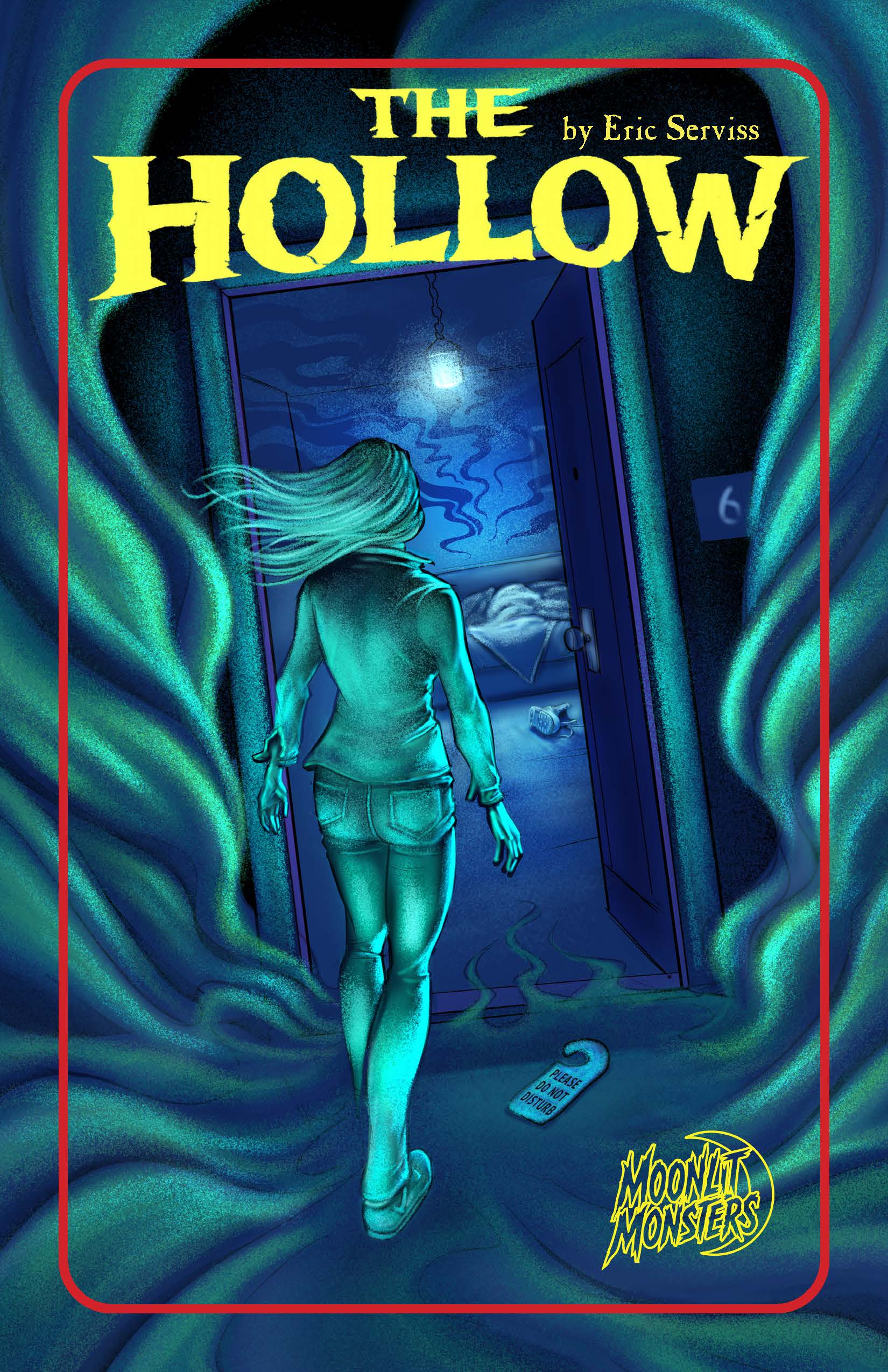
Moonlit Monsters
A subtler form of horror.
The Hollow shows that Moonlit Monsters can hold quieter and more intimate stories while maintaining its core. The danger still emerges from darkness and sends the world into chaos, but here the monster is harder to see, harder to name, and less easily separated from the people carrying it.
It is a monster story where the monster is more feeling than beast: grief given shape, loss given hunger, and old pain moving beneath the surface of a place.
Connected Craft
A focused experience.
The Hollow works because every part of the object points toward the same wound. The motel room, the note, the dead man, the police reports, the illustrations, the prose, and the printed form all serve the same central question: what happens when the truth is buried beneath grief, secrecy, and official explanation?
That is the useful lesson beyond this one book. A story object does not become memorable because it has more pieces. It becomes memorable when the pieces align into one coherent experience.
Emotional Horror
The supernatural threat is tied to loss, attachment, and the cost of refusing to let go.
Artifact-Driven Storytelling
The printed object, motel imagery, interior art, and physical format make the story feel like evidence from inside the larger world.
Focused Prose and Image
The prose and illustrations work together to carry mood, theme, and atmosphere without expanding beyond what the story needs.

Need a story object that has to do more than look finished?
SirViz builds visual stories, printed objects, artifacts, and narrative systems that give an idea a stronger shape.
Start a Conversation