The Assignment
Adaptation
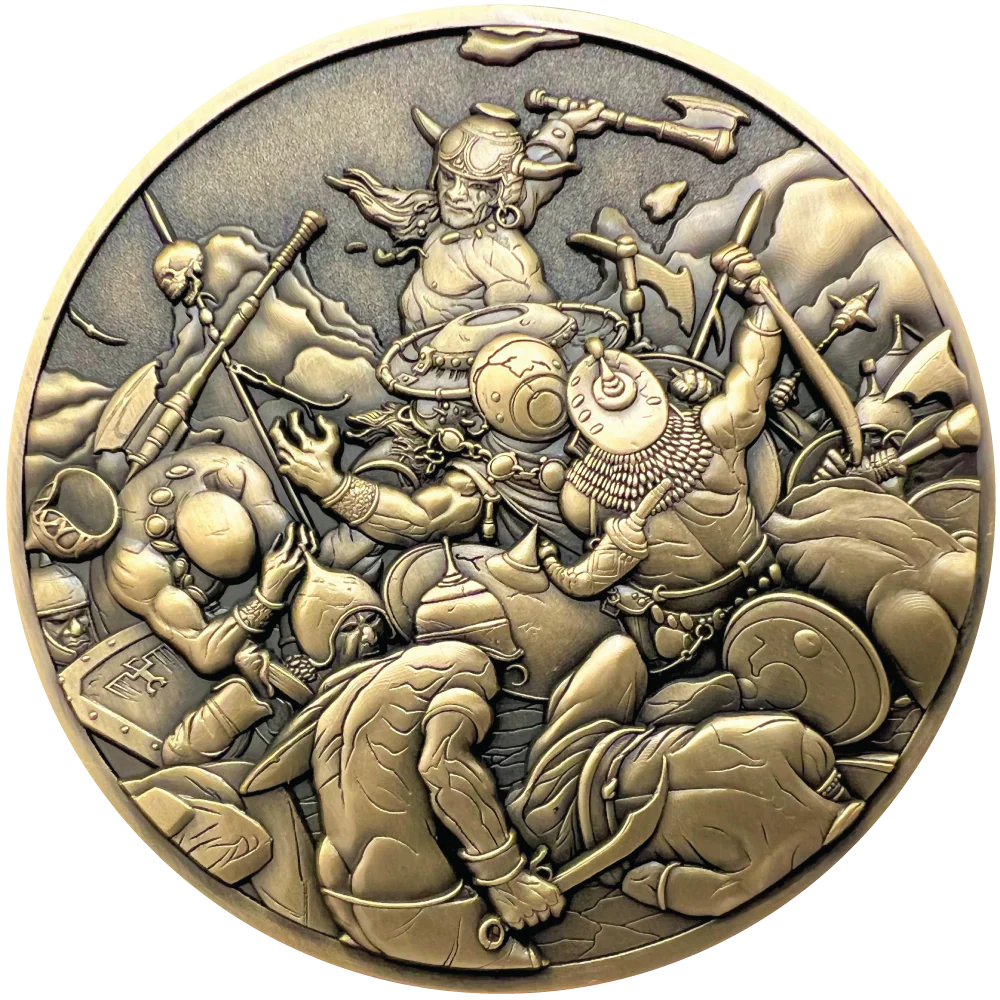
Goliath Coins commissioned a five-coin collection based on Frank Frazetta paintings. The source material relied on atmosphere, brushwork, compressed values, obscured anatomy, and edges that could disappear into darkness. A relief sculpture needs the opposite: explicit forms, readable overlaps, controlled depth, and decisions that remain clear at coin scale.
The production art became the bridge. It had to remain faithful to the source while giving the sculptor enough information to build a physical object.
Process Map
Five phases of evolution.
Composition
The coin inside the painting
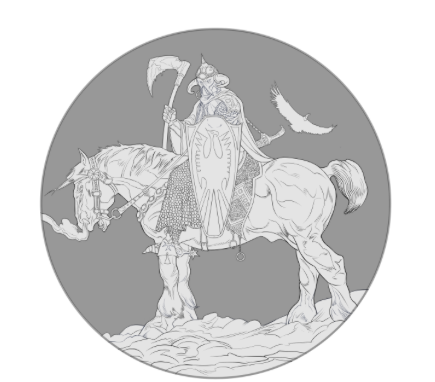
Frazetta composed for a rectangular canvas. The coin demanded a circular image only 2.25 inches across. The first decision was not how to draw the subject. It was what the circle could carry.
The crop had to preserve the dominant gesture, silhouette, and relationship between figure and environment without reducing the composition to a disconnected detail. Working beyond the final border allowed the image to remain spatially coherent before the circle selected the final view.
Production Artwork
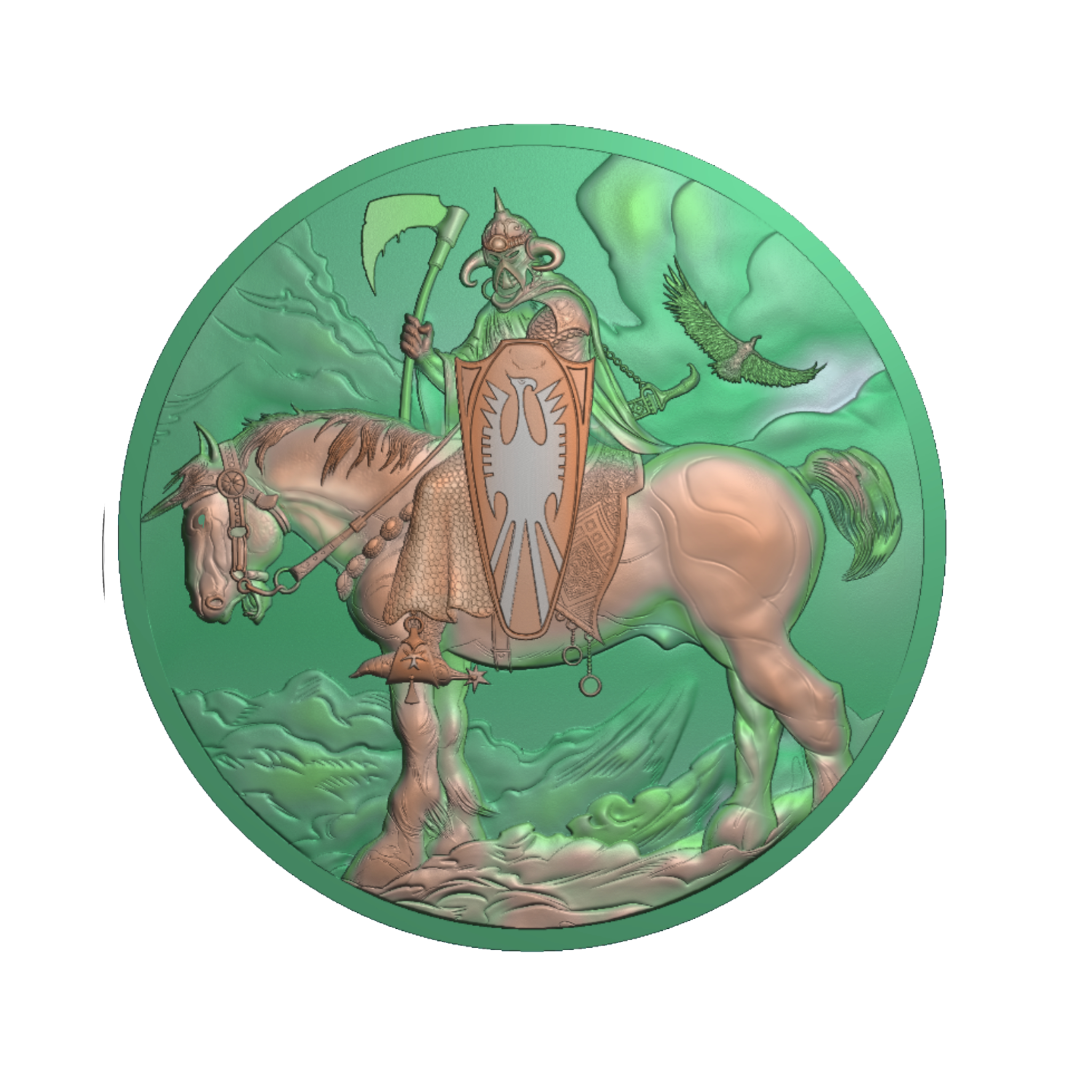
From atmosphere to instruction
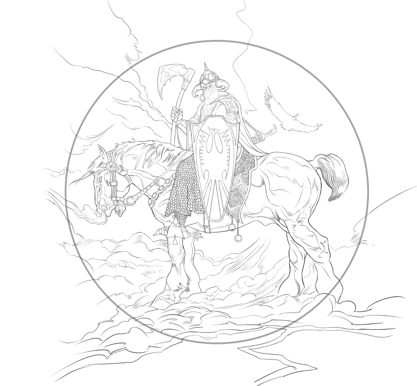
The production drawing was not a tracing and it was not meant to imitate Frazetta's brushwork. Its job was to identify what the sculptor needed to protect: edges, overlaps, material changes, anatomy, focal hierarchy, and areas where shadow in the painting would become actual depth.
Each mark had two responsibilities. It had to remain faithful to the source image and communicate how the image should behave when translated into relief.
Factory Review
Revisions sharpen the vision
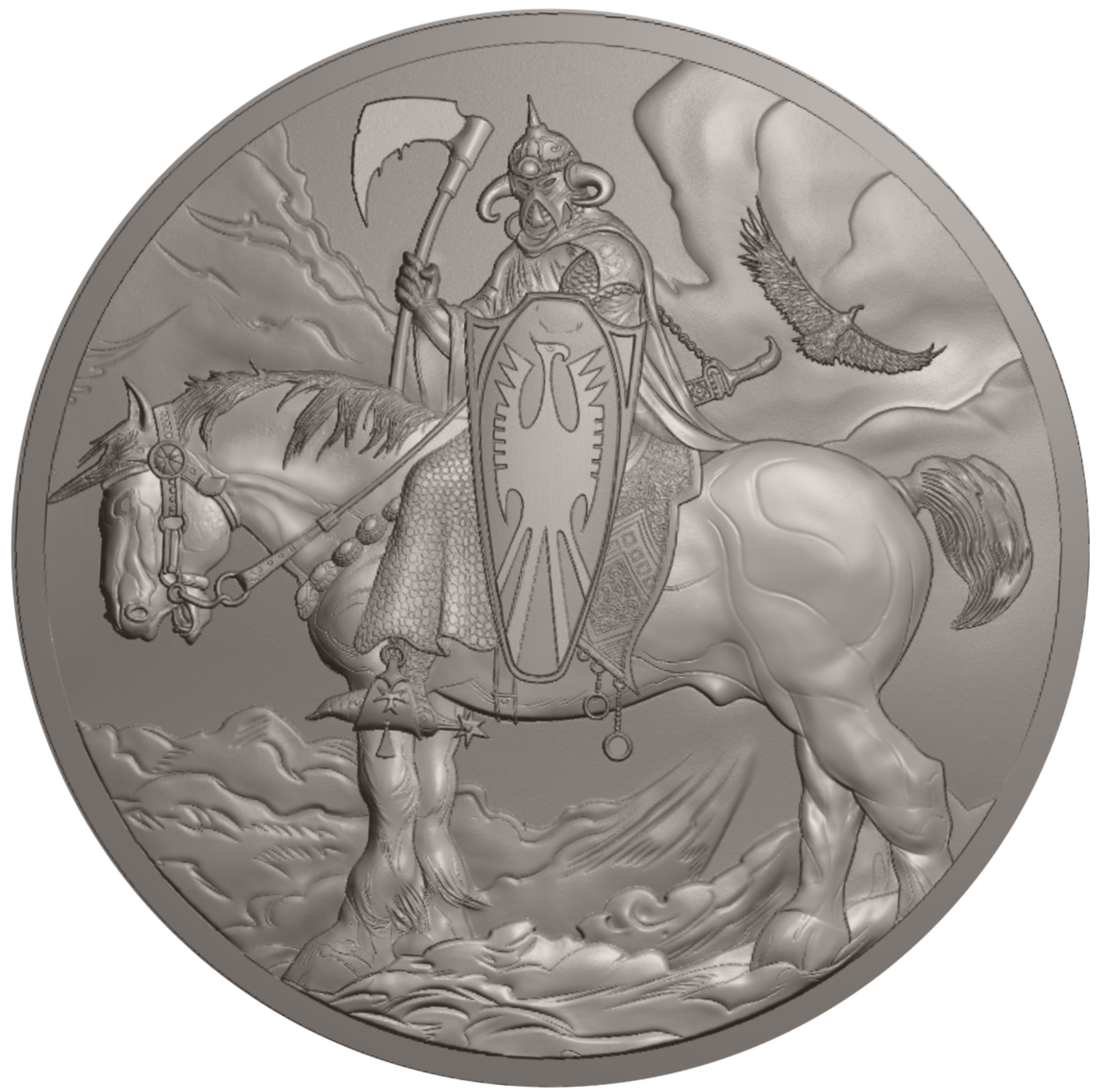
The factory needed more than general approval. Each inconsistency had to be isolated, corrected, and explained visually so the sculptor could address them one decision at a time.
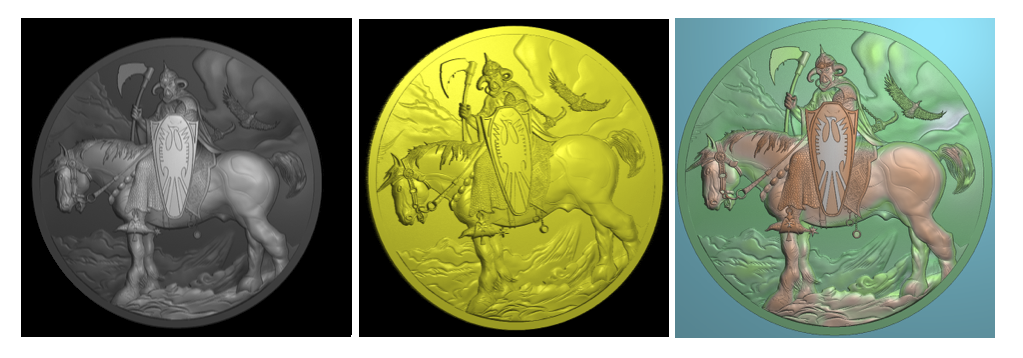
Production Approval
“Good to go. This is a wrap.”
After the final correction pass, Joe Ward approved the production artwork and described the result as a coin that had survived a difficult translation process.
Authorship & Adaptation
Paint remade in bronze
The original characters, compositions, mood, and paintings belong to Frank Frazetta. The adaptation required a separate body of design work: new circular crops, reconstructed hidden forms, relief hierarchy, production drawings, sculptural corrections, and decisions about what could be simplified without weakening the image.
That distinction is central to the project. The goal was not to claim the source. It was to carry it responsibly into a medium for which it had never been designed.
Delivery
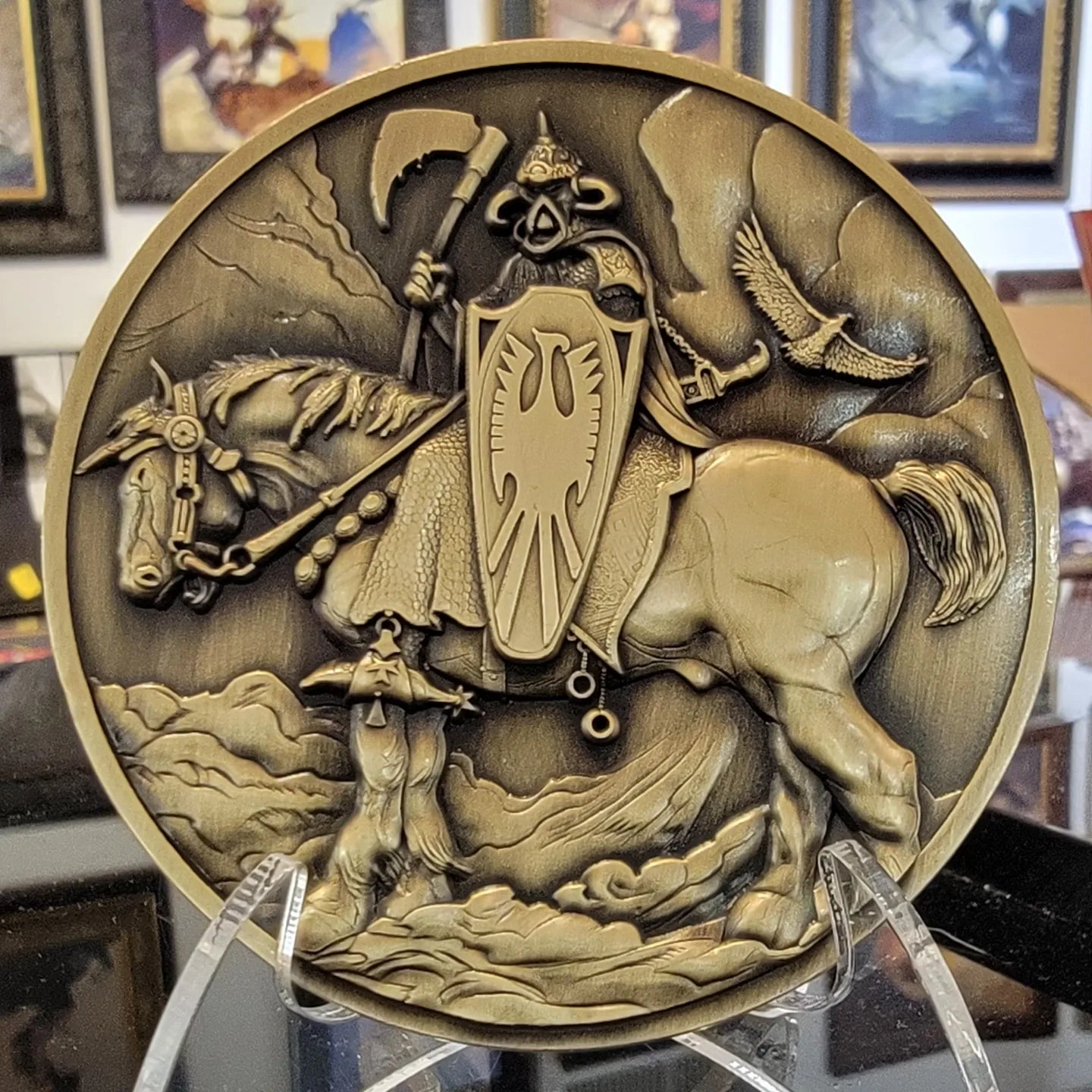
The object enters the world
The completed five-coin collection moved from production into official presentation and sale through the Frazetta Museum.
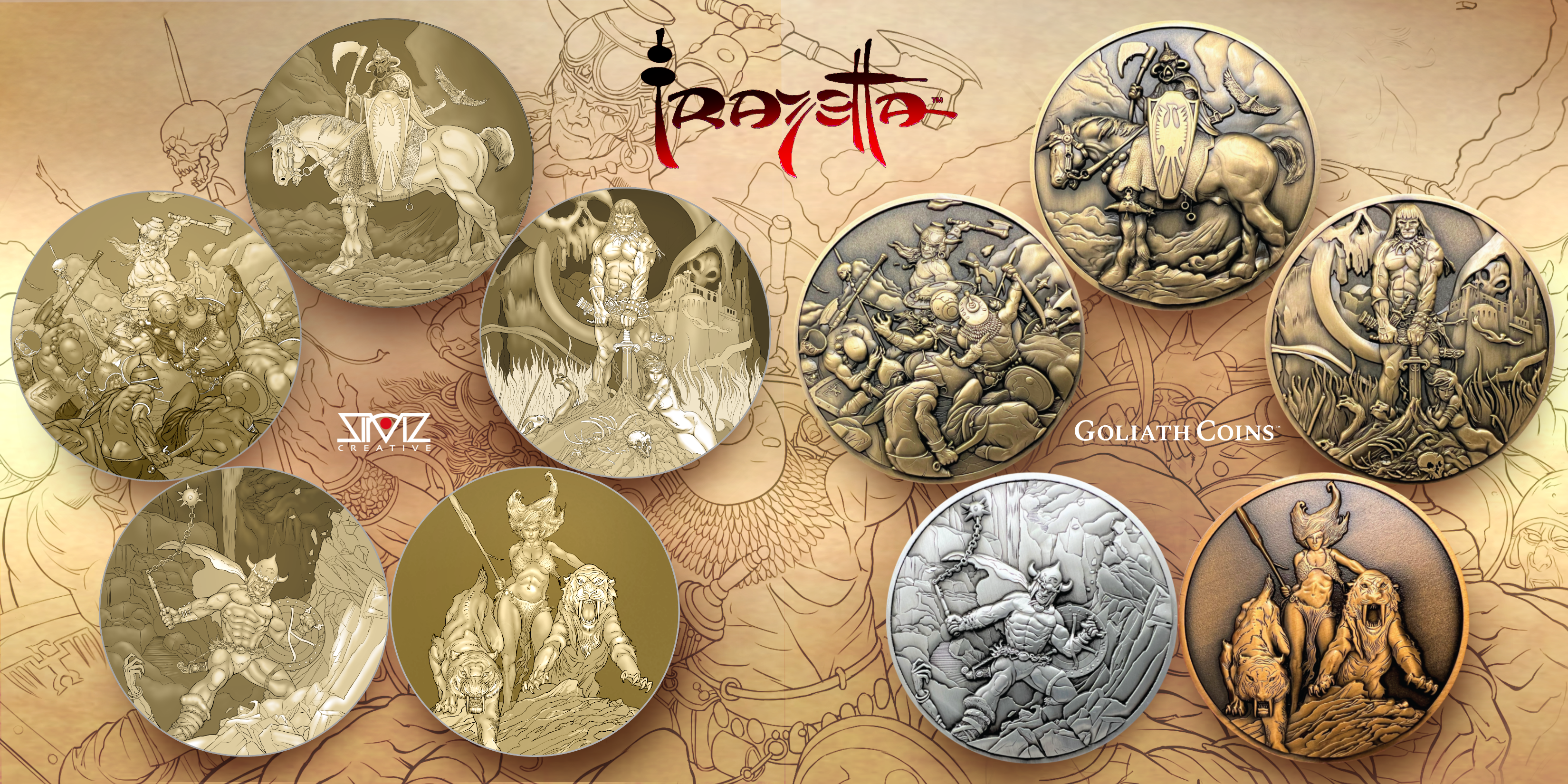
Connected Craft
Preserving the source material through transformation
The Frazetta collection demonstrates a broader kind of visual narrative work. An idea rarely moves directly from its original form to its final object. It passes through drawings, specifications, interpretations, collaborators, revisions, and manufacturing constraints.
The work is not finished when the first image is approved. It is finished when the meaning survives the entire journey.
Interpretation
Identify what makes the source unmistakable before changing its format.
Production Direction
Turn artistic judgment into instructions another specialist can execute.
Stewardship
Protect the source while allowing the new medium to become a successful object in its own right.

Need an idea carried into a new form?
SirViz helps translate stories, images, and established worlds into physical objects and visual systems without losing what made them matter.
Start a Conversation